

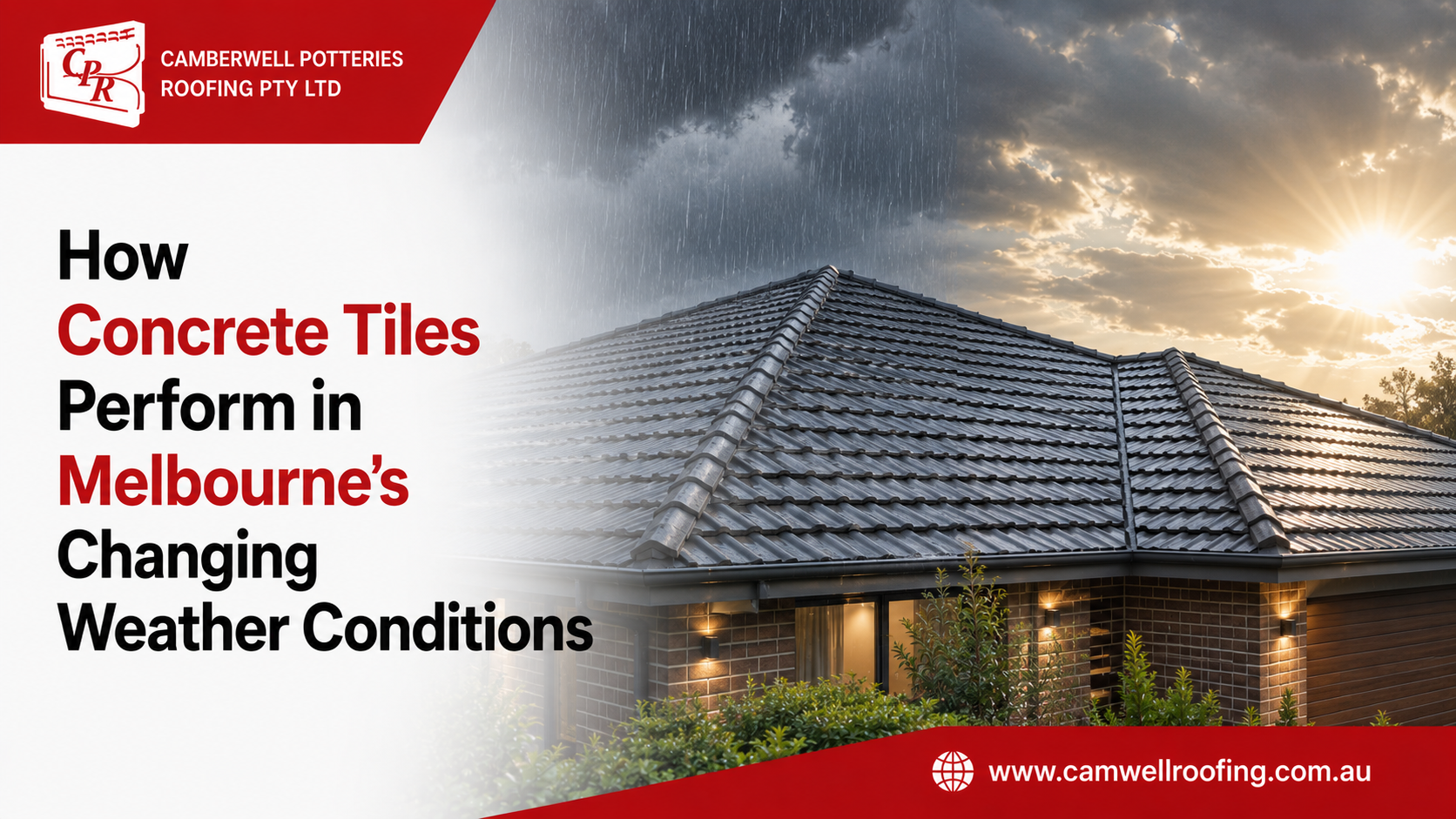
How Concrete Tiles Perform in Melbourne’s Changing Weather Conditions
Anyone who lives in Melbourne knows the drill. You leave home in a jumper, and by lunchtime you’re squinting in 35-degree heat. By dinner, it’s bucketing down.
Your roof deals with all of it on the same day. That relentless variety is the real test for any roofing material in this city. It also explains why concrete tiles in Melbourne have stayed so popular for so long.
This guide walks through how concrete tiles hold up against heat, rain, wind, and everything in between.
Why Is Melbourne So Hard on Roofs?
The problem isn’t any single weather event. It’s the constant switching between extremes.
A Melbourne roof might face all of this in one week:
- Temperature swings of 15 degrees or more within hours
- Summer heatwaves that push tile surfaces past 40 degrees
- Winter rain that hammers drainage and waterproofing
- Storm-force winds that find any weakness in the fixings
- UV exposure that never really takes a break, even in winter
That mix wears materials down in different ways. Cheap roofing cracks, corrodes, or fades within a decade. The right material shrugs it off for fifty years. So the choice you make now decides how much you’ll spend later.
What Exactly Are Concrete Roof Tiles?
They’re simpler than most people expect. Sand, cement, and water are pressed into moulds under high pressure, then cured until they’re rock-hard.
That’s it. The result is a dense, heavy tile that handles weather well.
You’ll find concrete roof tiles in a variety of shapes, from flat, modern profiles to the traditional curved look. Color is either mixed through the tile or applied as a surface coating. They’re everywhere in Australian suburbs for a good reason. Concrete tile roofing is affordable and lasts for decades.
How Do They Cope With Melbourne Summers?
This is where concrete shines. Intense sun doesn’t warp it or break it down the way it does lighter materials.
Moreover, concrete slowly absorbs heat throughout the day, then releases it after the sun sets. Your house stays cooler for longer, and your air conditioner works less.
A quick reality check on color, though. Surface coatings hold their shade for years, but some fading over time is normal. A restoration coat brings it back when needed. Through even the worst February heatwave, a good concrete roof stays structurally sound.
What Happens When the Rain Sets In?
Melbourne’s weather is less about downpours and more about persistent, soaking rain. Concrete tiles handle it well, but only when the whole system is right.
Here’s what actually keeps water out:
| Component | What it does |
| Roof pitch | Angles water off quickly before it pools |
| Underlay | A backup barrier beneath the tiles |
| Flashing | Seals the joints where leaks usually start |
| Tile overlap | Blocks wind-driven rain creeping underneath |
Most leaks are caused by poor installation, not faulty tiles. Get the fitting right, and a concrete roof stays dry for decades.
Can Concrete Tiles Handle Melbourne’s Winds?
A concrete tile is heavy, so it takes a serious gust to shift one that’s properly fixed.
Tiles need to be clipped and bedded correctly. When storm damage happens, it’s almost always old or loose fixings to blame, not the tiles.
After a rough storm, do a quick ground-level check. Look for anything slipped, cracked, or missing. Spotting one dodgy tile early beats discovering a leak three months later.
What About Temperature Swings and Hail?
The daily hot-cold cycles wear down rigid materials over time. Concrete gets around this neatly.
Each tile sits on its own, not locked into a single sheet. So the roof flexes gently as tiles expand and contract, without stress piling up anywhere. That’s a big reason these roofs last as long as they do.
Hail is rarer here, but it does arrive. Concrete resists it better than most, though a severe storm can still crack the odd tile. The fix is simple. You replace the damaged tiles individually, leaving the rest untouched.
Concrete vs Terracotta vs Colorbond
Most Melbourne homeowners weigh these three against each other. None is best. It comes down to budget, weight, and the look you’re after.
| Factor | Concrete Tiles | Terracotta Tiles | Colorbond |
| Lifespan | 50+ years | 50+ years | 40+ years |
| Weather resistance | Excellent | Excellent | Very good |
| Maintenance | Moderate | Low | Low |
| Initial cost | Lower | Higher | Moderate |
| Look | Broad range | Classic, rich | Sleek, modern |
Keeping a Concrete Roof in Good Shape
How long your roof lasts depends partly on you.
The upkeep isn’t hard:
- Get a proper inspection once a year
- Keep gutters and valleys clear of leaves
- Replace cracked or slipped tiles before they spread
- Clear moss and lichen before they trap moisture
- Book a check after any major storm
None of that costs much. All of it saves you from the big bills later.
When Does a Concrete Roof Need Attention?
A quality concrete roof lasts 50 years or more. Whether it reaches the top of that range depends on installation and care.
Some warning signs are worth knowing:
- Widespread faded color across the roof
- Multiple cracked or slipping tiles
- Leaks that keep coming back after patching
Catch it early, and a roof restoration can add years to your roof without a full rebuild. When damage is widespread, though, re-roofing is the smarter decision.
So, Are Concrete Tiles Right for Your Home?
For most Melbourne homes, yes. They take the heat, rain, wind, and constant swings this climate throws around, and they do it affordably.
Two things to keep in mind. They’re heavy, so your roof frame has to be able to support them. And heritage homes often lean toward terracotta for a classic look. A quick chat with an experienced roofing company in Melbourne helps you decide which way to go.
Book a Roof Check Before the Next Cold Snap
Concrete tiles handle Melbourne’s chaos well, but installation and maintenance determine how well they perform.
Give your roof a look now and then, especially after storms. If you’re weighing up a new roof or a restoration, get a professional opinion first. Book an inspection with the Camberwell team and talk through your concrete tile roofing options.
Frequently Asked Questions
Are concrete roof tiles suitable for Melbourne weather?
Yes. They cope with the heat, rain, wind, and temperature swings that define Melbourne weather roofing conditions.
How long do concrete roof tiles last in Australia?
50 years or more. Solid installation and regular maintenance stretch that even further.
Do concrete roof tiles crack in extreme heat?
Rarely. They resist heat and UV well, remaining sound even during the harshest heatwaves.
Are concrete tiles better than Colorbond roofing?
It depends on what you want. Concrete offers durability and thermal mass, while Colorbond suits lighter, modern designs.
Can concrete roof tiles withstand strong winds?
Yes, when fixed correctly. Their weight helps them resist lifting during Melbourne storms.
How much maintenance do concrete tile roofs require?
Not much. Annual checks, clean gutters, and prompt repairs keep them going for decades.
Do concrete tiles help with insulation?
They do. Their thermal mass slows heat transfer, keeping indoor temperatures steadier year-round.
When should a concrete tile roof be replaced?
When damage is widespread, or leaks keep returning. Isolated problems suit repairs instead.


