

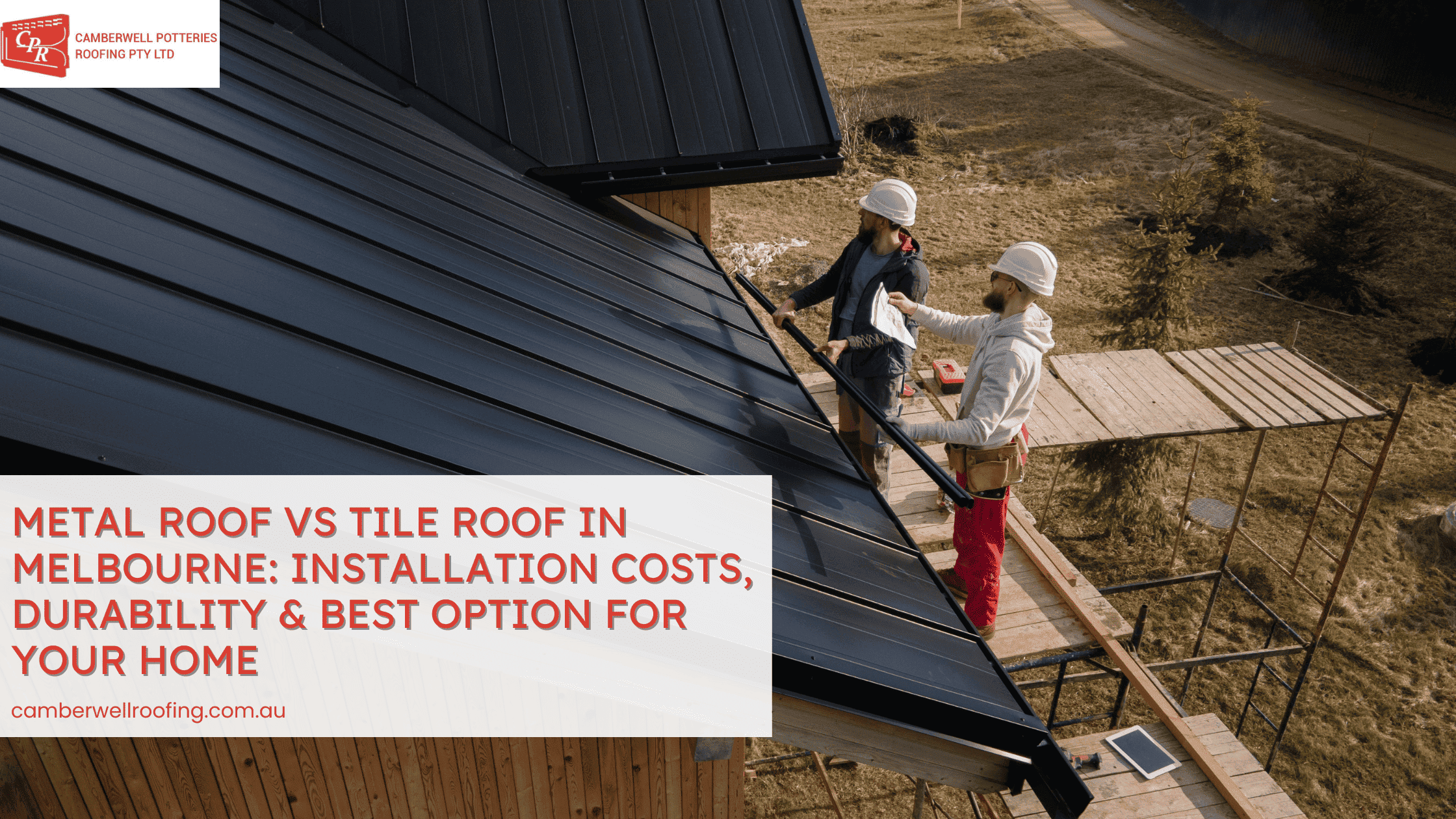
Metal Roof vs Tile Roof in Melbourne: Installation Costs, Durability & Best Option for Your Home
Your roof takes the biggest beating – rain, scorching summers, hail, and cold winters all land on it first. Yet most Melbourne homeowners give it the least thought until something goes wrong. It is found that around 1 in 3 Australian homes reported roof damage after severe weather events in the past five years. That number alone should make you pause. If you are working with a roofing contractor Melbourne homeowners trust, the first question they will ask is simple – Metal Roof vs Tile Roof ? The answer is not as straightforward as it seems. Metal Roof vs Tile Roof materials have loyal supporters. Both have been tested across Melbourne’s unpredictable seasons for decades. This guide puts them side by side. Here, you will find just the facts you need to make a smart decision for your home and your budget. So, let’s get started:
What Are Your Two Main Choices?
When it comes to re-roofing or building new, most Melbourne homes come down to two options – metal roofing systems Melbourne suppliers carry, or tile-based roofing. Metal Roof vs Tile Roof both have served Australian suburbs well for generations. That said, their performance, cost, and visual appeal differ quite a bit from each other. Knowing those differences early saves you from regret – and from spending money you did not need to spend. The right pick depends on your home’s age, your suburb’s character, your roof pitch, and how much you are willing to spend upfront versus over time. This way, you approach the decision with clear expectations rather than guesswork.
Understanding Metal Roofing
Metal roofing – typically Colorbond steel in the Australian context – is light, durable, and purpose-built to handle local weather conditions. It sheds rainwater quickly and cleanly. That way, you get far less chance of pooling or water penetration during Melbourne’s unpredictable downpours. Metal roof installation Melbourne professionals often recommend it for homes on flat or low-pitch roof lines where tiles simply do not perform as well. Another advantage worth noting – metal roofing is relatively easy to install on older homes that may have weaker roof structures. The lower weight means less stress on trusses and rafters. This makes it a smart call for pre-war homes across inner suburbs that were never designed to carry heavy tile loads. Likewise, metal requires very little maintenance once properly fitted – no repointing, no resealing, and no worrying about cracked individual units. Metal is also fire-resistant – a point that matters a great deal for Melbourne’s outer and fringe suburbs where bushfire exposure zones are formally classified. Not only that, but it suits modern, minimalist, and coastal-style homes very well from a design standpoint.
| Feature | Metal Roofing |
| Weight | Light (3-4 kg/m2) |
| Lifespan | 40-70 years with care |
| Maintenance | Low |
| Heat Absorption | Moderate – reflective coatings help |
| Noise Level | Can be loud in heavy rain |
| Fire Resistance | High – BAL-rated options available |
| Best For | Modern, low-pitch, and new builds |
Understanding Tile Roofing
Tile roofing splits into two main camps – concrete tiles Melbourne homeowners frequently choose for their affordability and versatility, and terracotta tiles that deliver a richer, more traditional appearance. Both are heavy, solid, and excellent at keeping homes naturally cooler in summer. Terracotta tile roofing Melbourne specialists often note that well-laid terracotta can last well beyond 50 years with minimal upkeep – sometimes outlasting the homes they were placed on.
- Concrete tile roofing Melbourne is the practical favourite for budget-conscious homeowners. Concrete tiles cost less upfront than terracotta, come in a wide range of profiles and colours, and perform reliably across Melbourne’s climate zones. They do require periodic resealing and repointing – but that maintenance is manageable when done on a regular schedule and caught early.
- Tile roof installation Melbourne contractors will also confirm that tiles work best on steeper roof pitches. The gravity-fed drainage of a steep tile roof is one of its greatest functional strengths. This is why suburbs like Camberwell, Hawthorn, and Kew – with their characteristic steeply pitched Federation and Edwardian homes – are almost entirely tile-roofed to this day.
| Feature | Concrete & Terracotta Tiles |
| Weight | Heavy (40-55 kg/m2) |
| Lifespan | 50+ years |
| Maintenance | Moderate – repointing and resealing needed |
| Heat Absorption | Low – excellent natural thermal mass |
| Noise Level | Quiet in rain |
| Fire Resistance | Naturally fire-resistant |
| Best For | Heritage, steep-pitch, and period homes |
Head-to-Head: Metal vs Tile for Melbourne Conditions
Melbourne’s weather is notoriously unpredictable – four seasons in one day is not a joke here. Therefore, any roofing material you choose must handle both extremes: blistering 40-degree summer days and sudden cold fronts with driving rain. Below is a direct comparison across the factors that matter most to Melbourne homeowners.
| Factor | Metal Roof | Tile Roof |
| Wind Resistance | High | High |
| Thermal Insulation | Moderate | Excellent |
| Water Drainage | Excellent | Good |
| Aesthetic Variety | Moderate | Wide range |
| Structural Load | Low | High – needs strong trusses |
| Repairability | Easy panel replacement | Tile matching can be tricky |
| Bushfire Rating | BAL-rated options available | Naturally fire-resistant |
| Heritage Zones | Check before installing | Usually approved |
As a roofing contractor Melbourne professionals often highlight that structural load is a factor many homeowners overlook entirely. Older Melbourne homes built before 1950 may not support the weight of a full tile re-roof without significant truss reinforcement. That reinforcement adds both cost and time to the project. That way, metal often becomes the more practical – and genuinely safer – choice for heritage and older properties. On the flip side, if your home is a newer build with strong engineered trusses, tile becomes a very competitive option. The thermal mass of tile keeps indoor temperatures steadier throughout the day – reducing how hard your heating and cooling system has to work year-round.
Which One Costs Less Long-Term?
The upfront cost is one conversation. Long-term cost is an entirely different one. Concrete roof tiles Melbourne suppliers offer competitive pricing on materials, but the maintenance cycle over the years adds up steadily. Repointing, resealing, replacing cracked tiles, and occasional repainting all carry a cost. Metal roofing tends to need far less of that kind of attention once it is properly installed and sealed.
| Cost Type | Metal Roof | Tile Roof |
| 10-Year Maintenance | Low – minimal upkeep | Moderate – sealing, repointing |
| 20-Year Total Cost | Generally lower | Slightly higher |
| Replacement Frequency | Low | Low if maintained well |
Hereby, when you look at the total cost of ownership across 20 to 30 years, metal often comes out ahead – particularly for homeowners who do not want the ongoing maintenance burden. Likewise, insurance premiums can vary noticeably. Homes with BAL-rated metal roofing in bushfire-risk zones may attract more favourable policy terms from some insurers. That is always worth a conversation with your insurance provider before you commit to either material.
Key Things to Check Before You Decide
Before settling on either option, there are a few practical things worth checking first.
- Talk to your local council. Heritage overlay areas – common across inner Melbourne suburbs – can restrict what roofing materials are permitted. In those zones, terracotta tile roofing Melbourne or concrete tile roofing Melbourne is often the only council-approved choice. Metal may require a specific planning permit in those situations.
- Second, get a structural assessment done on your existing roof frame. This is especially important if your home is more than 40 years old. That assessment will confirm whether your trusses can handle the load of a full tile re-roof – or whether metal is a better structural fit for your property.
- Third, think carefully about insulation. Metal roofs need a quality sarking layer beneath them to manage condensation and improve thermal performance. Tile roofs provide some natural insulation on their own – but both benefit greatly from a proper underlay. This way, you get the full performance benefit from whichever material you select.
What About Aesthetics?
Melbourne has some of Australia’s most distinctively styled residential suburbs. Heritage overlays and Neighbourhood Character guidelines are active across many councils – particularly in the inner east and south-east. Terracotta and concrete tiles Melbourne options blend naturally with Federation, Edwardian, and Victorian-era homes. The profiles, textures, and warm tones of tile roofing are deeply tied to the visual identity of those neighbourhoods. Metal roofing performs strongly in newer estates, coastal builds, and contemporary architectural styles. Colorbond comes in a broad palette – from deep charcoal to soft grey-greens – and can look genuinely striking on the right home. Therefore, do not dismiss it on aesthetics alone. The key is matching the material to the style of your home and the character of your street.
Signs Your Roof Needs Attention Right Now
Many Melbourne homeowners delay re-roofing longer than they should. The warning signs are usually visible – you just need to know what to look for. Watermarks on interior ceilings point to active leaks. Cracked, slipped, or missing tiles are obvious red flags. Rusting or lifting metal panels signals that the roof is past its protective prime. Age is the other major factor. If your roof is more than 25 to 30 years old and has not been properly maintained, it is worth getting a professional inspection before the next storm season arrives. Waiting until visible damage occurs is always the more expensive path in the long run.
Final Thoughts
There is no clear-cut winner in the metal vs tile debate – and anyone who tells you otherwise is oversimplifying. Both Metal Roof vs Tile Roof materials have genuine strengths for Melbourne homes. Your final decision should come down to your home’s structure, your suburb’s character, your long-term budget, and how much ongoing maintenance you are prepared to do. What is clear is this – the quality of installation makes as big a difference as the material itself. A well-laid metal roof will outperform a poorly installed tile roof every time. The reverse is equally true. Therefore, choosing a skilled and experienced installer is just as important as choosing the right material for your home. Camberwell Potteries Roofing has been helping Melbourne homeowners navigate exactly this decision for over 60 years. They are an accredited CSR Roofing Specialist and back their work with a 50-year performance guarantee – a level of commitment that speaks clearly about the standard they hold themselves to.


