
Terracotta Roof Problems Homeowners Should Not Ignore
Terracotta has been covering Australian homes for well over a century. It handles heat, frost, salt air, and heavy rain better than most other roofing materials. But even the best material on the market develops problems over time, and terracotta is no exception. The difference between a minor repair and a major structural job usually comes down to how early the problem is caught. A qualified roofing company Melbourne homeowners trust will tell you the same thing every time: terracotta problems are almost always cheaper to fix early than late.
These are the most common problems that show up on terracotta roofs across Melbourne, and exactly what needs to happen to fix each one.
The Most Common Terracotta Roof Problems at a Glance
| Problem | Urgency Level | Left Untreated |
| Cracked or broken tiles | High | Water entry, structural damage |
| Ridge capping failure | High | Leaks at the roof peak |
| Moss and lichen growth | Medium | Moisture retention, tile degradation |
| Deteriorating bedding mortar | High | Ridge tiles are shifting and slipping |
| Flashing damage | High | Persistent leaks around penetrations |
| Tile surface flaking | Medium | Coastal salt damage, aesthetic decline |
| Misaligned tiles | Medium | Gaps that allow water and pests in |
1. Cracked or Broken Tiles
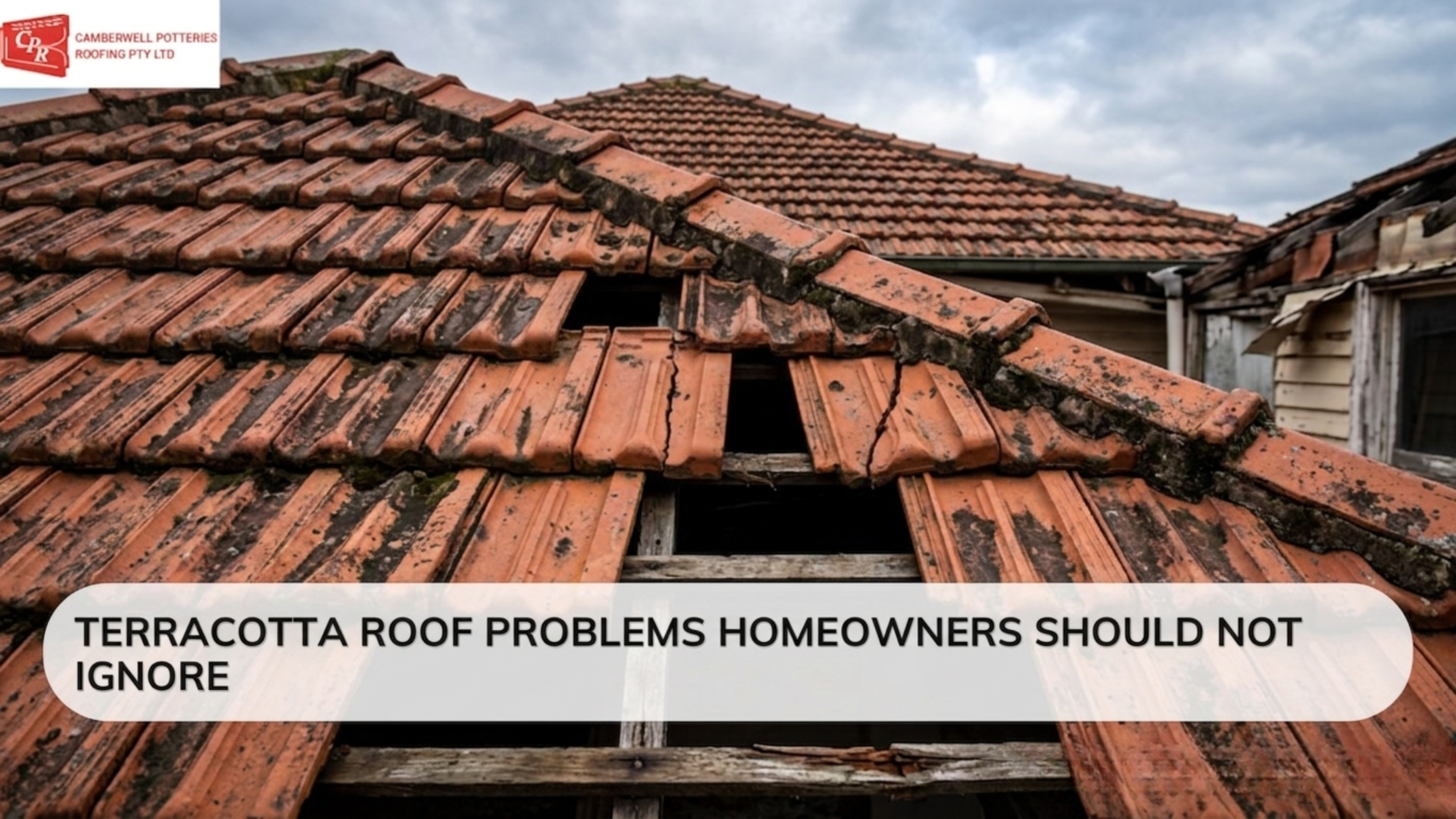
This is the most visible problem on any terracotta roof. Individual tiles crack from hail impact, fallen branches, and foot traffic during earlier repair work. Temperature fluctuations also cause expansion and contraction, which creates hairline fractures over time.
A cracked tile does not automatically mean a leak today. It means a leak is coming. Water finds its way through hairline cracks gradually, and by the time a ceiling stain appears, the water has usually been entering for weeks.
How it gets repaired:
A licensed roofer sources matching replacement tiles from the original profile range. Terracotta comes in dozens of profiles, so matching matters both functionally and visually. The damaged tile is removed carefully without disturbing the surrounding tiles. The replacement is seated properly and checked against the water-shedding alignment of the whole row.
Roof tile damage signs to watch for from the ground include visible breaks, missing sections on any tile face, or tiles sitting at a slight angle compared to those around them.
2. Ridge Capping Failure
Ridge capping sits at the peak of the roof and along the hips. It is held down by a cement mortar bed and sealed with a flexible pointing compound. Over decades of Melbourne weather, that mortar dries out, hardens, and cracks. Once it goes, the ridge tiles can shift, and water enters directly into the roof cavity below.
This is one of the leading roof deterioration causes on older terracotta roofs across Melbourne’s inner and middle suburbs.
How it gets repaired:
The old, crumbling mortar is completely removed. New cement mortar is laid as a fresh bedding base. A modern flexible pointing compound is then applied over the top, designed to move slightly with temperature changes without cracking. Flexible pointing can accommodate around 17mm of movement before it fails, which makes it far more durable than the rigid mortar it replaces.
3. Moss, Lichen, and Algae Growth
Moss and lichen on a terracotta roof look cosmetic from the ground. They are not purely cosmetic. Both organisms retain moisture against the tile surface. That constant dampness accelerates wear and eventually causes the tile surface itself to break down.
Roofing wear and tear in Australia is significantly accelerated by biological growth, particularly on south-facing slopes and under tree canopies, where shade keeps tiles damp for longer periods.
How it gets repaired:
Terracotta requires a soft-wash treatment rather than high-pressure cleaning. High pressure damages the tile surface. A fungicidal cleanser is applied first to kill spores and weaken the attachment of existing growth. Within 2 to 3 weeks, the moss and lichen die and begin to break down naturally. A follow-up anti-fungal treatment inhibits regrowth. Most roofs treated this way remain clear for 9 to 10 years before new growth needs attention again.
4. Deteriorating Bedding Mortar
The bedding mortar is distinct from the pointing compound. It sits underneath the ridge tiles as the structural base. When it deteriorates, ridge tiles lose their secure seating and begin to shift. This is often what causes ridge tiles to slide down the hip line or sit visibly out of alignment.
Terracotta roof tiles Melbourne that are 30 or more years old commonly show this problem, particularly if the original mortar was never updated after installation.
How it gets repaired:
All loose or deteriorated bedding is removed and replaced with fresh cement mortar. Every ridge tile is checked for correct seating before the new flexible pointing goes over the top. The combination of fresh bedding and flexible pointing gives the ridge capping a significantly extended lifespan compared to either product used alone.
5. Flashing Damage
Flashings are metal strips that seal the junction between roof tiles and fixed structures such as chimneys, skylights, and roof valleys. They are almost always the weak point on older roofs. Metal flashings warp, corrode, and lift over time, particularly after periods of extreme heat followed by cold.
A flashing problem does not always immediately produce an obvious leak. Water often tracks along the timber batten beneath the tiles before entering the ceiling, making the source difficult to identify without a proper inspection.
How it gets repaired:
Damaged or corroded flashings are replaced with new Colorbond or Zincalume metal. Lead flashings around chimneys on older heritage properties are carefully reinstated to match the original profile. All junction points are checked and resealed as part of the repair.
6. Tile Surface Flaking
This problem is more common on terracotta roofs in coastal Melbourne suburbs. Salt air gradually breaks down the tile surface, causing it to flake and deteriorate in a way that looks similar to a skin condition on the roof. Surface flaking does not immediately compromise waterproofing, but it signals that the tile has begun to degrade from the outside in.
How it gets repaired:
Mildly flaking tiles are soft-washed first to remove biological growth from the degraded surface. Once dry, a clear penetrating sealer is applied to reduce the tile’s porosity and slow further salt ingress. Tiles where the flaking has progressed too deeply are replaced individually. Sealing a structurally compromised tile does not restore it.
Terracotta roof maintenance in coastal areas specifically benefits from periodic sealing to reduce the porosity of the tile surface. A clear penetrating sealer applied after cleaning significantly slows salt-related surface damage and extends the tile’s serviceable life.
7. Misaligned Tiles
Over time, particularly on roofs in elevated or exposed locations, tiles gradually shift from their original position. The gaps between tiles widen slightly. Water that should sheet off the surface starts finding its way into the gaps instead. Pests also find misaligned tiles easier to enter through.
A roof inspection checklist tile assessment always includes checking tile alignment across every slope, particularly after significant storm events. Misalignment is one of those problems that looks minor from the ground but creates genuine risk at the tile join level.
How it gets repaired:
Tiles are carefully realigned by hand and checked against the correct overlap position. Any tiles that have warped significantly are replaced. The repair is straightforward when caught early. Left too long, misalignment accelerates wear on the surrounding tiles as water is repeatedly directed into the wrong drainage path.
How to Catch These Problems Before They Become Expensive
The single most effective thing a homeowner can do is look at the roof regularly and book a professional inspection every two to three years. Most of the problems above are straightforward and affordable to fix when caught early. The same problems, left for five or six years, involve water damage to the timber frame, the ceiling, and sometimes the internal walls.
Practical ways to prevent roof damage early:
- Check the roof from the ground with binoculars after every significant storm
- Clear gutters twice a year so water drains away cleanly rather than backing up
- Treat moss as soon as it appears, rather than waiting until it covers a full slope
- Book a professional inspection before and after winter each year
- Never walk on terracotta tiles without guidance from a qualified roofer
Roof inspection checklist tiles assessment from inside the home is equally important. A damp smell in the roof cavity, water stains on the ceiling, or visible light through the ceiling space all indicate active water entry that needs attention immediately.
Getting the Right Help
Terracotta roof maintenance is not complicated. It requires consistent attention and a qualified roofer who understands the specific characteristics of the material. Terracotta behaves differently from concrete and requires different cleaning methods, different repair compounds, and different handling during any work on the roof surface.
Camberwell Potteries Roofing has been working on terracotta roofs across Melbourne for over 60 years as the roofing company Melbourne homeowners return to generation after generation. The team is accredited as CSR Roofing Specialists with a 50-year performance guarantee on all work completed.
If your terracotta roof is showing any of the signs described above, an inspection is the right first step. Call 03 9888 7088 or contact the team online.
Related reading
- How long terracotta roofing lasts — and what actually fails first
- Can you paint terracotta tiles? — the honest answer
- Heritage roof restoration — matching an out-of-production profile
- Roof restoration — cleaning, re-bedding, repointing and recoating
Understanding Roof Tile Types for Australian Homes
Most homeowners have never had to think seriously about roof tiles before. Then the roof needs replacing, and suddenly there are three material options, different lifespans, and a contractor asking which one you want. Making that call without any background knowledge is genuinely difficult.
The choice matters more than most people realise. The right material, matched properly to the home, lasts decades longer than a mismatched one. This guide covers the main roof tile materials Australia-wide, so you walk into that conversation already knowing what to ask.
How the Main Tile Types Compare
| Material | Lifespan | Insulation | Maintenance Level | Best For |
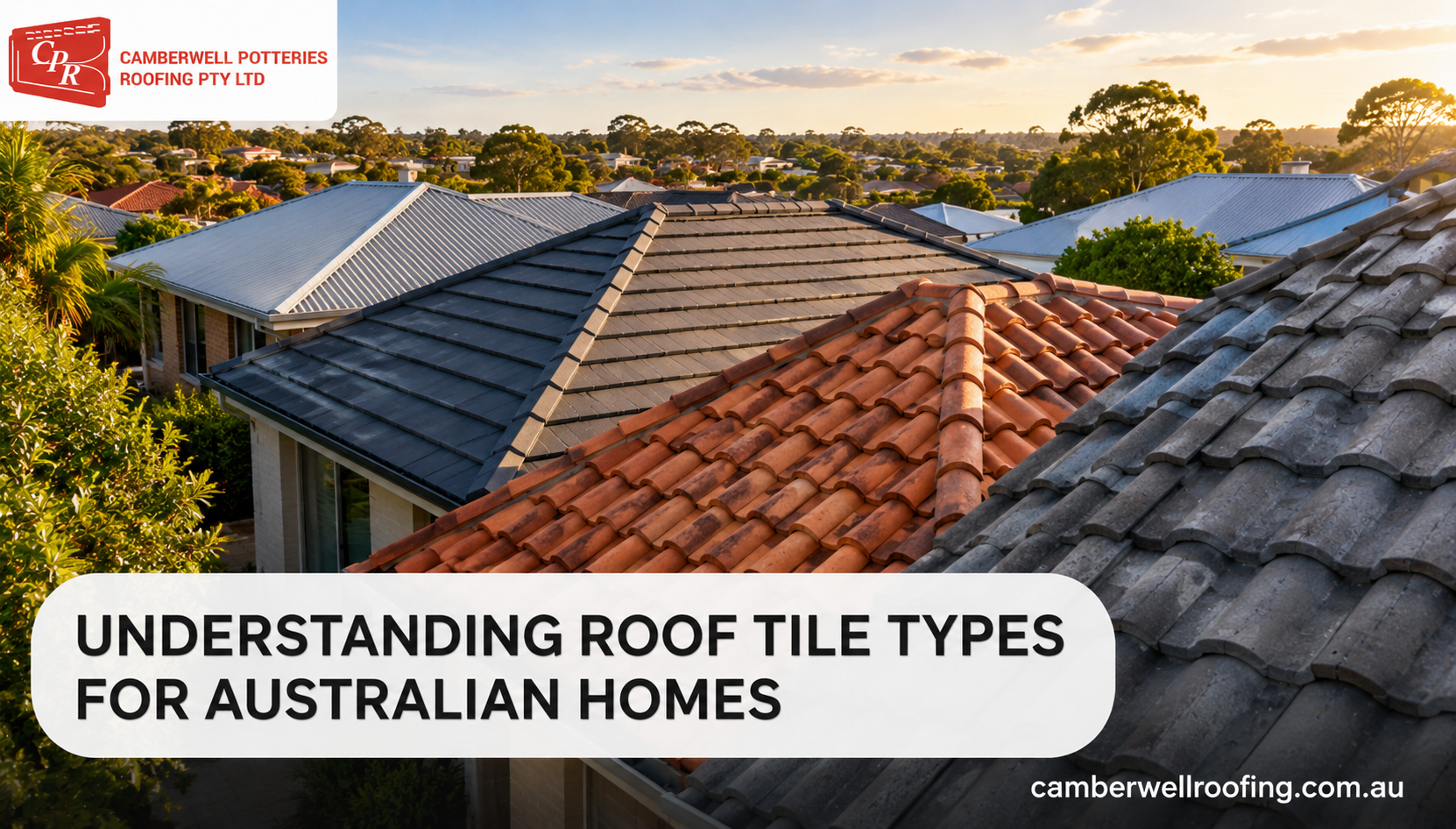
| Terracotta | 50 to 100+ years | Excellent | Low | Heritage and premium homes |
| Concrete | 30 to 50 years | Good | Moderate | Standard residential builds |
| Colorbond steel | 30 to 50 years | Moderate | Low | Modern and lightweight builds |
| Slate | 75 to 150 years | Good | Very low | Premium heritage properties |
1. Terracotta Roof Tiles
Terracotta is the oldest roofing material still widely used across Australia. It is made from natural clay fired at high temperatures. That process gives it a density and hardness that most other materials simply cannot match.
Why Melbourne homeowners choose terracotta:
- Does not warp in summer heat or crack under frost
- Salt air from coastal environments does not affect it
- Naturally regulates interior temperature through thermal mass
- Colours do not fade over the life of the tile
- CSR Monier terracotta tiles carry a 50-year warranty
Roof lifespan by material rarely gets better than terracotta. A properly maintained terracotta roof can last close to a century. Some heritage properties in Melbourne’s inner east still have original tiles performing well after 80 or 90 years.
Roofing insulation performance is one of terracotta’s genuine strengths. The material is a poor conductor of heat. External temperature extremes take longer to transfer through to the interior, which keeps heating and cooling costs lower over time.
Maintenance requirements:
- Annual gutter clearing to prevent debris from sitting against tiles
- Moss and lichen treatment every few years as needed
- Individual cracked tiles are replaced as they occur
- Professional inspection every two to three years
2. Concrete Roof Tiles
The concrete roof tiles Melbourne homeowners choose are the most common tile type in standard residential builds across the city. They are made from sand, cement, and water pressed under high pressure. The result is a dense, durable tile that performs well across most Melbourne conditions.
Concrete tiles have a lower profile than terracotta. That gives roofs a cleaner, more contemporary look. The colour range available through CSR Monier includes a wide variety of sands, pigments, and finishes that suit both traditional and modern architecture.
Where concrete tiles perform well:
- Impervious to frost and ice in cooler outer suburbs
- Dense enough to suppress rain and hail noise effectively
- Resistant to corrosion and salt air in coastal suburbs
- Available in a wide range of colours and profiles
The honest limitation:
Concrete absorbs moisture more than terracotta over time. This affects the surface coating gradually, which is why periodic resealing is part of proper maintenance. Concrete tiles also weigh significantly more than Colorbond, so older homes may need a structural assessment first.
Roofing maintenance requirements for concrete tiles:
- Resealing every ten to fifteen years
- Gutter cleaning twice a year minimum
- Moss treatment on south-facing slopes as needed
- Inspection after significant storm events
3. Colorbond Steel
Colorbond has grown more popular in Melbourne over the last two decades than any other roofing material. It is a steel sheeting product from BlueScope with a thermoset paint finish and a warranty of up to 36 years, depending on product grade.
The practical advantages:
- Lightweight — suits older homes where the timber frame has load limits
- No individual tiles to crack, break, or replace after hailstorms
- Faster installation than tiled roofing
- Low ongoing maintenance once installed
Where the roofing material comparison gets important:
Roofing insulation performance with Colorbond depends heavily on the sarking and insulation installed underneath the sheets. Steel transfers heat quickly in both directions. Without proper underlayment, a Colorbond roof makes a home hotter in summer and colder in winter than a tiled equivalent. Correctly installed with quality sarking, that gap closes significantly.
Colorbond suits modern architecture, flat or low-pitch roof designs, and homeowners who want minimal ongoing maintenance. It is less suited to heritage suburbs where council overlays may restrict its use.
4. Slate Tiles
Slate sits at the premium end of the roof tile durability comparison. It is a natural stone material with a proven track record across more than a century of Australian roofing. Melbourne’s inner heritage suburbs still have functioning slate roofs from the Victorian and Edwardian eras.
Why Slate performs so well over time:
- Does not absorb water the way concrete does
- Does not support moss growth to the same degree
- Does not fade or change colour over decades
- Fire-resistant and frost-proof
The honest constraint with slate is cost and availability. Matching slate for repairs on an existing heritage roof can be difficult and expensive. New installations carry a significant price premium over concrete or terracotta.
For heritage properties where council overlays require original materials, slate is sometimes not a choice but a requirement. For everyone else, it is a premium option suited to homeowners who want the longest possible lifespan.
How to Choose Between Them
The best roofing materials for homes in Melbourne always depend on four things: what the existing roof structure can support, what the local council overlay permits, what the architectural style of the home is, and what maintenance commitment the homeowner is willing to make.
| Your Situation | Material to Consider |
| Heritage home in inner Melbourne | Terracotta or slate |
| Standard suburban home any era | Concrete tiles |
| Modern home or lightweight structure | Colorbond steel |
| Heritage overlay requiring original materials | Slate |
| Coastal suburb with salt air exposure | Terracotta or concrete |
Roof lifespan by material should also factor into any budget conversation. A terracotta roof lasting 80 years costs less over time than three concrete tile replacements across the same period. That long-term calculation is something experienced contractors factor into their recommendations from the start.
Which Material Is Right for Your Home?
Roof tile materials Australia-wide are not all equivalent. The right choice for one Melbourne home can be wrong for a property two streets away. Heritage overlays, structural load limits, roof pitch, and orientation all affect which material performs best in any specific situation.
Camberwell Potteries Roofing works with both terracotta and concrete roof tiles Melbourne across new roofing, re-roofing, and restoration projects. As a trusted roofing contractor Melbourne homeowners have relied on for over 60 years, the team are accredited CSR Roofing Specialists carrying a 50-year performance guarantee.
The advice always starts with your specific home rather than a standard recommendation.
Call 03 9888 7088 or contact the team online to get started.