
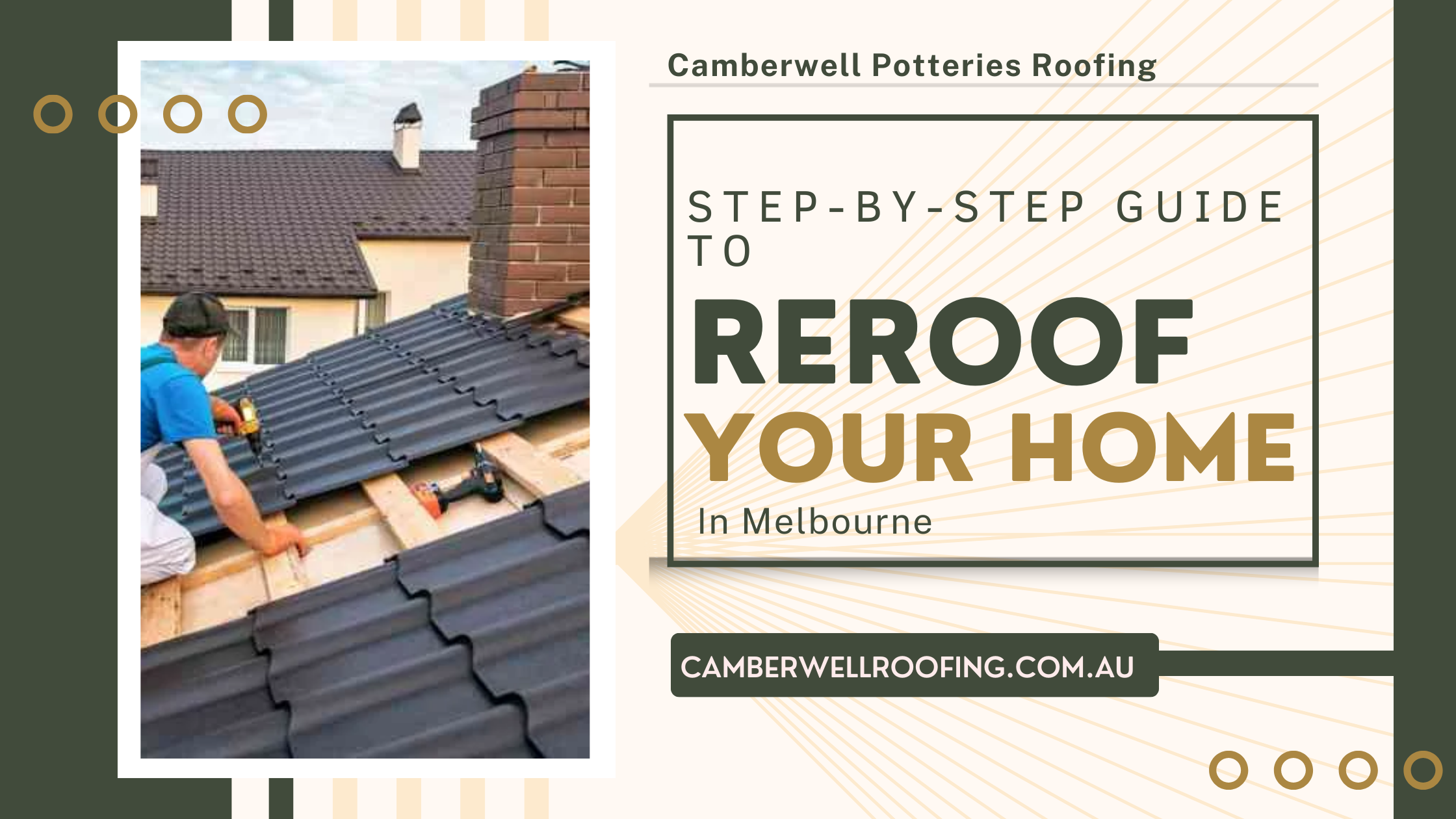
Step-By-Step Guide to Reroof Your Home in Melbourne
The roof, one of your house’s vital components, should be appropriately installed to last for decades.
A well-designed New Roof Installation can protect your home, its residents, and its belongings from the external environment.
Although it’s one of the most durable parts of your house, you still need to deploy proper maintenance practices.
Sometimes, when the roof experiences minor damages, a quick fix is all it takes.
However, over time, your roof might suffer severe wear and tear and, thus, require more attention and work than a quick fix-up.
In such a case, professional roofers might recommend roof replacement or reroofing. Many homeowners opt for reroofing as the cost-effective alternative.
If you think your roof needs an update, keep reading to learn what makes new roof installation different from reroofing, essential reroofing accessories, and the steps involved in reroofing.
How is New Roof Installation Different from Reroofing?
Before learning how to reroof your home in Melbourne, let’s discuss how new roof installation differs from reroofing.
A complete roof replacement and new roof installation involves tearing off the existing tiles, fixing the underlying damage, and installing a new layer of tiles.
Although this roofing option is expensive, it offers long-term benefits, including enhancing the durability and appearance of the roof and improving your home’s energy efficiency.
On the other hand, reroofing is all about adding a layer of tiles on top of the old roof. This method is usually considered when your roof is in relatively good shape.
The plus point of reroofing is that it’s a more cost-effective option and takes less time to complete.
Enlisting Important Reroofing Accessories
Here are some essential roofing accessories that can be used for reroofing Melbourne. However, remember that not all reroofing projects might need all listed roofing accessories.
- Ice and rain shields: Ice and rain shields are installed to protect your roof and house against water infiltration caused by heavy rain and ice dams. These shields are usually made of rubberised asphalt material and provide the roof with a watertight seal. Ice and rain shields are used for homes in areas receiving more than average rainfall.
- Underlayment: A regular underlayment is made of synthetic material and provides additional protection against water infiltration. It prevents leaks, provides insulation to the roof, and acts as a barrier against moisture.
- Starter strip: A starter strip is used under the layer of tiles comprising a waterproof underlayment and battens disposed upon the underlayment. Installing it along the roof’s eaves can create a secure base for the first course of roof tiles during roof replacement Melbourne. It aids in preventing wind uplift and water infiltration while creating a clean, finished look along the edges of the roof.
- Cement and sealants: Cement and sealants are used to seal the edges and seams of roofing materials to prevent water from seeping. These are available in various colours to match the roofing material. Moreover, they can create a watertight seal around chimneys, vents, and other roof penetrations.
- Roofing tiles: You can find a variety of roofing tiles in different styles, patterns, sizes, shapes, and colours. A reroofing professional installs a layer of roofing tiles on the existing roof to maintain its durability and aesthetics. Terracotta and concrete tiles are your best choice when looking for durable roofing materials.
- Ventilation: Proper roof ventilation is crucial to remove moisture and heat from your attic, preventing roof insulation and deck damage. To enable proper ventilation, you can look for different roof vents, from solar to gable, ridge, or soffit vents.
Steps Involved in Reroofing Your Home
The following are seven simple steps to successful reroofing for your home in Melbourne:
- Inspecting the roof: The first step in reroofing Melbourne is to examine the roof, evaluate its condition, and determine the best solution. If your roof is extensively damaged, your roofers might suggest reroofing or replacement. When opting for reroofing, explain how you want your roof’s structure to appear to the contractor.
- Selecting the roofing materials: You can use various types of roofing materials to re-proof your house. However, many factors can influence your roofing materials choice, such as local weather conditions, your home’s structure, distance to the beach, and more. For instance, terracotta roof tiles are the best for a durable roof and to give it a natural, earthy look.
- Preparation work: Before tearing off the damaged layer of your roof, professional re-roofers do the required prep work. The prep work can include installing safety boards for a steep roof, protecting landscaping, moving outdoor furniture and pots, and more.
- Tearing off the roof: The next step is tearing the old roofing material down to the roof deck. In addition, re-roofers can remove other damaged roofing materials or repair them to eliminate any further issues with the new roofing.
- Installing underlayment: Once the re-roofers confirm that your roof deck is in good shape, they will install the underlayment. If you live in an area that receives heavy rainfall, consider installing ice and water shields on valleys and roof penetrations in addition to the underlayment.
- Installing roof flashings and tiles: After installing the roof underlayment, it’s time to install new roofing tiles. First, re-roofers install the starter strip and then the regular roofing tiles for a more durable and sturdier roof. In addition to roofing tiles, your contractor will also install roof flashings and a ventilation system.
- Cleaning up: Professional re-roofers usually clean up the roof after removing the old materials. In addition, they do the final cleanup after installing the new roofing materials. Cleaners remove the debris from the roof and use a magnetic roller to ensure no staples or nails are left behind.
Wrapping up it all!
You can fix your damaged or old roof by opting for reroofing or roof replacement Melbourne.
However, nowadays, almost every other homeowner seems to choose reroofing over roof replacement because the former is the cost-effective option.
If you think your damaged roof can be fixed with reroofing, knowing the necessary roofing materials and steps involved can help you make correct reroofing decisions and, thus, complete the project successfully.
Re-roofing or restoration — which do you actually need?
These get used interchangeably and they are different jobs at very different costs.
A restoration cleans, repoints, seals and recoats the tiles you already have. It suits a roof that is structurally sound but tired across the whole surface. It does not replace the sarking, battens or fixings underneath, because those sit below the tiles. See roof restoration.
A re-roof strips the roof back to the timbers and replaces the sarking, battens and tiles. It is the option that resets the clock, and the only one worth doing once the system underneath has reached the end of its life. See re-roofing.
If the problem is one leak or a section of failed pointing, neither applies — that is a repair. Most roofs we are called about need less work than the owner feared.
What decides the cost of a re-roof
Roof area is the starting point, but it is rarely what makes two quotes differ. These are the real variables:
- Pitch and complexity. A steep roof, multiple pitches, valleys, dormers or a turret all add time and scaffolding.
- Access. Whether a truck and bins can get close, and whether scaffolding can be erected easily.
- The tile you choose. Terracotta costs more than concrete. We supply both terracotta and concrete from CSR Monier and Bristile.
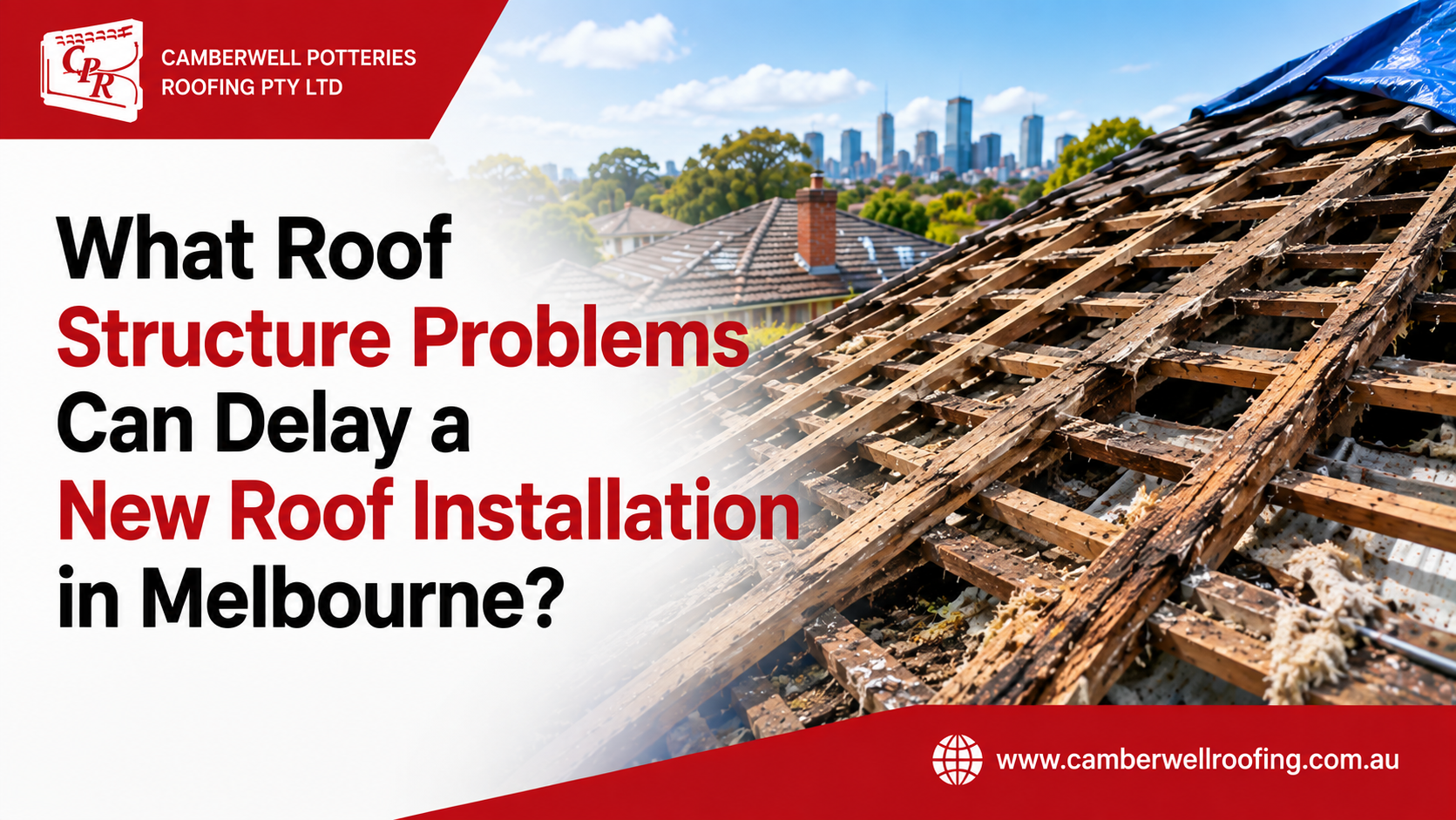
- What is underneath. Rotten battens, split rafters or no sarking at all only become visible once the tiles come off. This is the single biggest source of variation between a quote and a final invoice, which is why the inspection matters.
- Flashings, valleys and guttering. Often due for replacement at the same time, and much cheaper to do while the roof is open.
We will not quote a figure over the phone, because what decides it is not visible from the ground. The inspection and the written quote are free.
How long does a re-roof take?
For a typical domestic tiled roof, one to two weeks of working days, weather permitting. For comparison, across our other work: a simple repair is often an hour, a standard bed and point is about a day, and a re-bed, point and paint runs two to three days.
What extends a re-roof is access, roof complexity, and anything unexpected found once the tiles are off.
Weather, and why we work in sections
Your ceilings are the only barrier to weather while the roof is open. That is why we strip and re-lay in sections rather than opening the whole roof at once, and why we watch the forecast rather than the calendar. A job that could be done faster by opening everything is not worth the risk to your plaster.
Living in the house while it happens
Most people do. What is worth knowing in advance:
- It is noisy, and there will be people on the roof and a skip out the front
- Fine dust can come through ceiling vents and downlights — cover or move anything precious in upstairs rooms
- Access needs to stay clear for a truck and bins
- Neighbours are worth a heads-up, particularly in the tighter streets around Camberwell and Hawthorn
- If you have solar panels, they need removing and refitting — worth factoring into timing and cost
Warranties you should ask about
There are two separate things, and quotes often blur them.
The tile carries the manufacturer warranty. Monier covers 30 years against manufacturing defects, with 30 years on terracotta colour. Bristile terracotta carries a Colour for Life warranty and a 50 year product warranty on selected profiles; Bristile concrete carries 50 years. Neither manufacturer covers colour on concrete, because fading there is treated as normal weathering.
The workmanship is the roofer’s. Ours is 10 years on a full re-roof and 7 years on a restoration. Ask for it in writing — and note that both manufacturers require the roof to be maintained in line with their guides, so neglect can void a tile claim. See our FAQ on warranties and roof maintenance.
Choosing who does the work
Ask each quote the same questions: does it include new sarking and battens or only tiles; which brand and profile, and is that profile still in production; flexible pointing or rigid mortar; are valleys, flashings and gutters included; is scaffolding included; and what workmanship guarantee comes in writing.
Ask specifically about safety. Hand-rail, scaffolding or a roof harness should be used on every job and costed into the quote. A quote that looks cheaper may simply have left it out. See red flags when hiring a roofing contractor.
Two quotes that look thousands apart are usually quoting different jobs.
Do you need a permit?
For a like-for-like replacement, usually not. If your property sits in a heritage overlay — common through Camberwell, Hawthorn, Kew and Malvern — or you are changing the roof profile or colour significantly, you may. See building permits for re-roofing in Melbourne, and if yours is a period home, re-roofing a heritage home.
Get it looked at first
Camberwell Potteries Roofing has worked on Melbourne tiled roofs since the 1930s, when the company made the terracotta tiles rather than laying them. Terracotta and concrete only — no metal, Colorbond, polycarbonate or slate.
Free roof inspection and obligation-free quote. Call 03 9888 7088, Monday to Friday 9:00am to 4:00pm, or send us a message. We will tell you whether your roof needs replacing, restoring or just repairing — and if it is a repair, we will say so.