
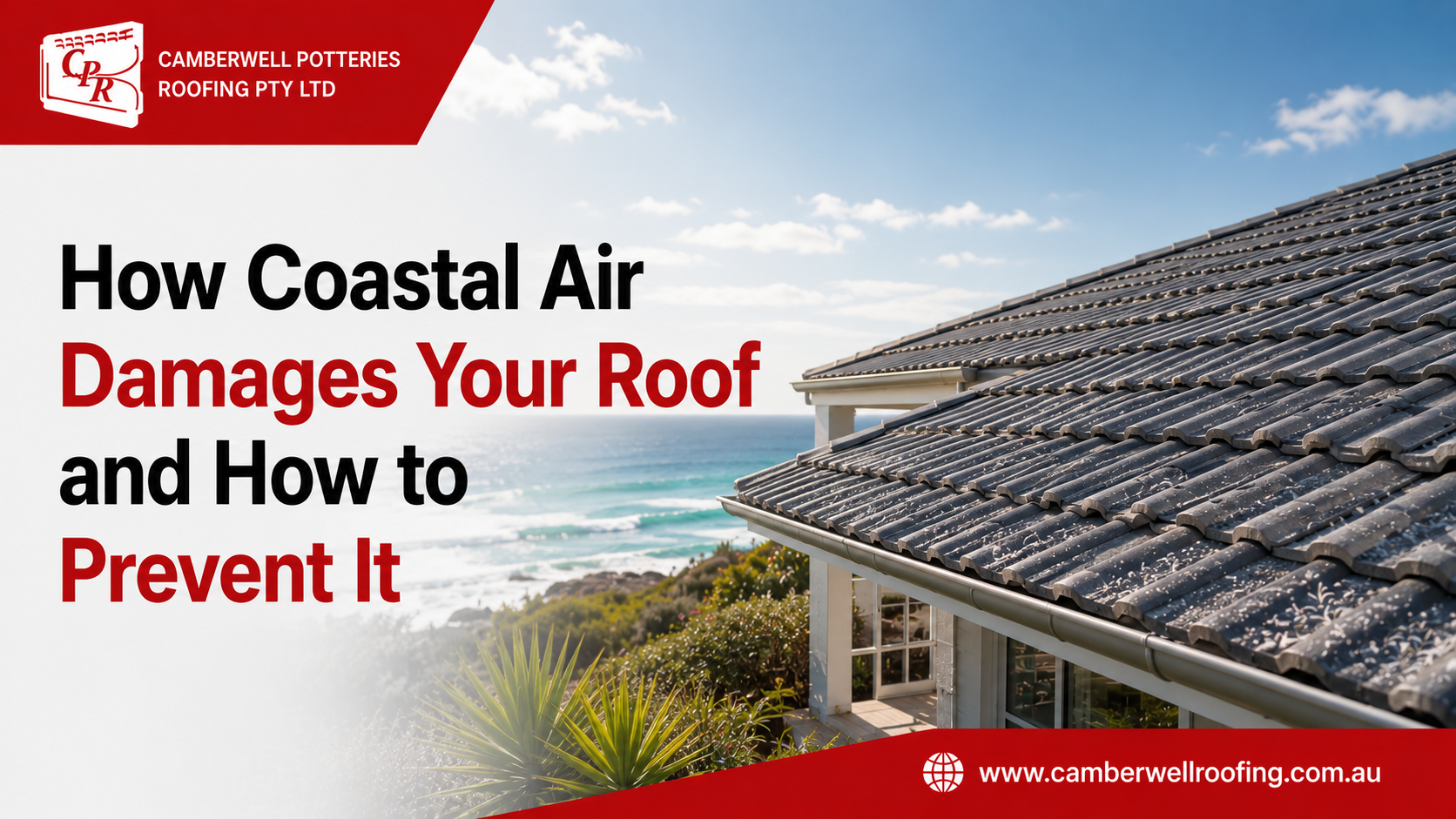
How Coastal Air Damages Your Roof and How to Prevent It
If you live near the water in Melbourne, you already know the trade-off. The sea breeze that makes summer bearable is quietly working against your roof every single day. Salt does not announce itself. It just settles, builds up, and corrodes, and most homeowners only notice once the repair bill has arrived.
The good news is that coastal roof damage is largely preventable. It comes down to the right material, regular roof maintenance in Melbourne, the right fixings, and a rinse now and then.
This guide explains exactly how salt air attacks a roof, and what you can do to stay ahead of it.
Why Is Salt Air So Hard on Roofs?
Salt is one of steel’s oldest enemies, and coastal air carries it everywhere. Prevailing winds pick up fine salt particles off breaking surf and drop them across every roof for kilometres inland.
The problem is not the salt landing once. It is the salt staying put. On parts of the roof that rain never reaches- the deeper valleys, the underside of eaves, the sheltered flashings- salt builds into a crust. That crust holds moisture against the metal around the clock, and constant moisture is what drives corrosion.
Here is the part that catches people out. Two houses on the same street can weather very differently. Exposure depends on wind direction, elevation, and what sits between you and the water. Also, because they do roof maintenance differently in Melbourne.
What Does Coastal Air Actually Damage?
Salt does not attack a roof evenly. It goes for the weak points first, and knowing them tells you where to look.
- The fasteners: Screws, nails, and clips are small and often the first to rust. As they corrode, panels loosen and gaps form, allowing water in.
- The flashings and valleys: These channels allow water to pass through, so they stay damp longer and trap salt more easily.
- The protective coating: Wind-driven grit and constant humidity slowly wear down the finish on both metal and tile.
- The fixing points on tiles: On tiled roofs, the mortar and metal fittings suffer even when the tiles themselves hold up.
Fastener failure deserves special attention. A roof can look perfectly sound from the ground while the screws holding it down quietly rust through. That is often how the first leak appears, seemingly out of nowhere. These are the coastal roofing problems that do the most expensive damage precisely because they stay hidden.
Which Materials Survive Salt Air Best?
Material choice is the single biggest decision for a coastal home. The right material lasts for decades. The wrong one fails within a few years.
For most Australian beachside homes, these are the materials worth knowing:
- Standard Colorbond steel: Suits homes set well back from the water. It performs reliably when rain regularly rinses the roof.
- Colorbond Ultra steel: Ultra is recommended for severe marine areas roughly 100 to 200 metres from breaking surf, where you can smell salt in the air. It uses a tougher substrate built to resist corrosion.
- Stainless steel grades: For homes within about 100 metres of breaking surf, a stainless substrate handles the harshest exposure.
Choosing the right Colorbond roofing coastal environments grade is not about looks. It is about the substrate beneath the paint, which is the part that actually resists the salt. A roofer who knows the local area can assess your exposure, since a home on an exposed ridge facing the surf sits in a different situation from one tucked behind other buildings.
How Can You Prevent Coastal Roof Damage?
Prevention is far cheaper than replacement, and much of it is genuinely simple. A few habits protect the roof for decades.
- Rinse the roof with fresh water: This is the one thing every coastal homeowner should do. A wash every few months clears the salt crust from the sheltered areas rain never reaches.
- Use stainless steel fasteners: Replacing standard screws and nails with stainless options eliminates the most common failure point.
- Choose the right material grade upfront: If you are re-roofing, spend on the correct coastal grade the first time.
- Reseal vulnerable joints: Reapplying anti-corrosion coatings to flashings and joints protects the spots that fail first.
The rinsing point is worth repeating, because it costs almost nothing. Even the toughest marine-grade steel still needs it, since salt build-up damages any surface over time. Think of it as protecting roofs from salt air the same way you would rinse sand off a bike after the beach.
When Should You Call a Professional?
Some of this you can handle yourself. A garden hose and stainless-steel fittings are well within reach. Other parts need trained eyes.
A professional can spot corrosion you cannot see from the ground, particularly around fasteners and hidden flashings. They can also confirm whether your material grade actually matches your exposure. Booking regular roof inspection services is the smartest form of coastal home roof maintenance, because catching a failing fastener early costs a fraction of the cost of repairing water damage later.
As a rule, have a coastal roof checked once a year, and again after any severe storm. Salt-laden wind does its worst damage during exactly those events.
Protect Your Roof Before the Salt Wins
Coastal living is worth it, and your roof does not have to pay the price. The formula is straightforward. Rinse it regularly, fit stainless fasteners, choose the right grade of steel, and have it inspected once a year.
A trusted roofing contractor Melbourne homeowners rely on can assess your exposure and recommend exactly what your home needs. If your roof is near the water and overdue for a look, book an inspection today and stay ahead of the salt.
FAQs
How often should I rinse a coastal roof?
Every few months, with fresh water. It clears the salt that builds up in areas where rain never reaches, such as valleys and under eaves.
Is Colorbond good for homes near the beach?
Yes, but the grade matters. Homes within about 100 to 200 metres of breaking surf should use Colorbond Ultra, not the standard version.
How do I know if salt is already damaging my roof?
Look for rusting screws, loose panels, or streaky stains. Often, the fasteners go first, so a roof can look fine while trouble hides underneath.
Can I just clean the roof myself?
The rinsing, yes, a garden hose does the job. Leave the close-up checks for corrosion and flashings to a professional, since those spots are easy to miss.
How close to the water is too close for standard Colorbond?
As a rough guide, homes within a kilometre of the surf should get their exposure checked. Wind and elevation matter as much as distance.