

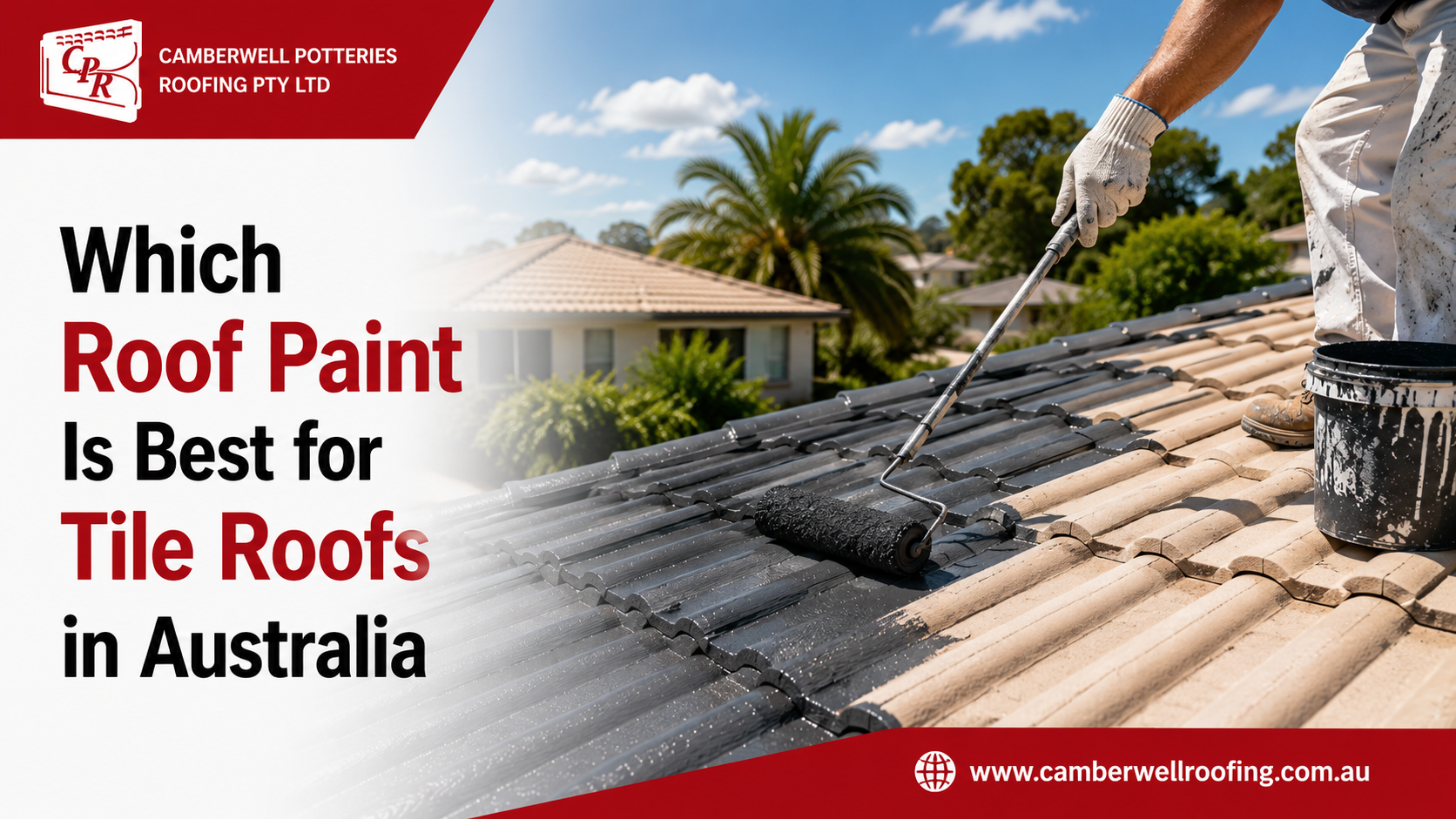
Which Roof Paint Is Best for Tile Roofs in Australia
The best roof paint for tile roofs in Australia is a 100% acrylic roof membrane, but only for concrete tiles. Terracotta is a different story entirely, and using the wrong product on it leads to a flaking, patchy mess within months. Choosing correctly starts with knowing which type of tile you have.
This guide lists the paint options that actually work, those to avoid, and the factors that determine your choice. By the end, you will know exactly what suits your roof.
However, if you are unsure at any point, a trusted roofing company Melbourne homeowners rely on can confirm it in a single inspection.
The Best Paint and Coating Options for Tile Roofs
Here are the seven things to know before you choose, from the right products to the traps to avoid.
1. 100% Acrylic Roof Membrane (Best for Concrete Tiles)
This is the industry standard for concrete tiles, and for good reason. Acrylic membrane flexes with the tiles as they expand and contract, so it resists cracking in the heat.
It adheres easily to porous concrete and resists stains and scratches. Well-known options include Dulux AcraTex and Wattyl Solagard, both formulated for local conditions. The best paint for concrete roof tiles Australia trusts is almost always a quality acrylic membrane.
2. A Primer or Sealer (The Step Most People Skip)
Paint is only as good as what sits beneath it. Aged, porous, or chalky concrete tiles need a primer or sealer before the topcoat goes on.
Skipping this is the most common reason a paint job fails early. The roof tile paint Australia homeowners choose will only last if the surface is properly sealed first. Preparation is not optional.
3. Clear Sealer (The Right Choice for Unglazed Terracotta)
Terracotta needs a completely different approach. Unglazed terracotta tiles are porous and can take a specialist clear sealer, not standard paint.
This sealer protects the surface without altering its colour. So the best paint for terracotta roof tiles is often not paint at all, but a clear glaze chosen for that specific surface. A professional can confirm whether your terracotta is suitable.
4. What to Avoid: Painting Glazed Terracotta
This is the trap that catches the most homeowners. You generally cannot paint glazed terracotta roof tiles in Melbourne at all.
5. UV Resistance (Non-Negotiable in Australia)
The Australian sun is brutal on roof coatings. Any product you choose must resist UV, or it will fade and chalk within a few years.
A high-quality UV-resistant roof paint retains its colour and finish for much longer. Since you only repaint a roof every 15 years or so, this feature is worth the cost. Many modern coatings also reflect heat, lowering indoor temperatures and cooling costs.
6. Repair Before You Paint
Paint is not a repair, and this point saves real money. A coating improves appearance and adds surface protection, but it will not fix a cracked or broken tile.
Worse, painting over damage hides the problems you need to see. Any sound approach to roof repair and painting treats them as two separate jobs, with repairs always first. Replace broken tiles and clean the roof before any coating goes on.
7. The Full System Beats a Single Tin
The best results come from a coating system, not a single product. That system usually means cleaning, replacing damaged tiles, priming, and then applying the membrane.
Each step protects the one after it. This is why professional jobs last longer than a quick DIY coat. The finish gets its colour from the membrane, but its longevity comes from the preparation underneath.
How to Decide for Your Own Roof
The decision comes down to a short checklist. Run through these before you commit to anything.
- Identify your tile type: Concrete takes acrylic membranes. Glazed terracotta cannot be painted.
- Check the tile condition: Replace cracked tiles first.
- Confirm the product suits your surface: Ask for the manufacturer’s data sheet.
- Prioritise UV resistance: Essential for the Australian climate.
- Factor in preparation: Clean and prime the surface as much as the paint.
Terracotta roof tiles for Melbourne homes need particular caution, since the wrong product ruins both the look and the guarantee. When in doubt, get a professional opinion before buying anything.
Get the Right Advice Before You Paint
Choosing roof paint is simple once you know your tile type. Concrete takes an acrylic membrane, glazed terracotta needs a clear sealer or nothing at all, and every roof needs repairs and preparation first. Get these right, and your roof looks better and lasts longer.
When the decision matters this much, expert advice is worth seeking. The team at Camberwell Potteries has spent decades working with concrete and terracotta roofs across Melbourne. If you are weighing up painting or restoring your roof, book an inspection today at our roofing company in Melbourne and get advice tailored to your specific tiles.
Frequently Asked Questions
Can you paint terracotta roof tiles?
Usually not. Glazed terracotta has a sealed surface that paint cannot grip, so it flakes off. Unglazed terracotta can take a specialist clear sealer instead.
What paint is best for concrete roof tiles?
A 100% acrylic roof membrane, applied over a clean, primed surface. Brands like Dulux AcraTex and Wattyl Solagard are widely used in Australia.
How long does roof paint last?
A high-quality acrylic membrane on concrete tiles typically lasts about 15 years. Good preparation and UV resistance make the biggest difference to longevity.
Does painting a roof fix leaks?
No. Paint improves appearance and surface protection, but it cannot repair cracked tiles or leaks. Those must be fixed before any coating is applied.
Is it worth painting a roof myself?
Rarely. The safety risks, the need for correct preparation, and the fragility of tiles make this a job best left to professionals for a lasting result.
What guarantee comes with the paint?
This is the question worth asking, because it separates a proper restoration from a tidy-up that looks good for two summers.
At Camberwell Potteries Roofing our roof restoration work carries a 7 year workmanship warranty, and the coating itself is guaranteed separately depending on which product you choose:
- Standard paint — 12 year guarantee. Suits most homes and most roofs.
- Upgraded paint — 20 year guarantee. Worth the difference if you intend to stay in the house long term, or the roof is exposed to full afternoon sun.
Ask any quote to put the coating guarantee in writing, and ask whether it is the manufacturer’s guarantee or the roofer’s. They are not the same thing, and a cheap quote sometimes has neither.
One thing to know about terracotta
Terracotta colour is fired through the clay rather than coated on, and both manufacturers we supply warrant terracotta for colour. So a terracotta roof rarely needs painting for colour reasons — the work is usually in the pointing, valleys, flashings and cleaning. Concrete is the opposite: its colour is a surface coating that weathers, and neither manufacturer covers it, which is why recoating a concrete roof makes such a visible difference.
We restore and recoat both. See roof restoration, or the differences between terracotta and concrete roof tiles.
Get it looked at first
Whether painting is even the right treatment depends on the condition of the pointing, the tiles and the sarking underneath — and none of that is visible from the ground.
Free roof inspection and obligation-free quote. Call 03 9888 7088, Monday to Friday 9:00am to 4:00pm, or send us a message. Safety is always our first priority — hand-rail, scaffolding or a roof harness is used on every job and included in the quote.
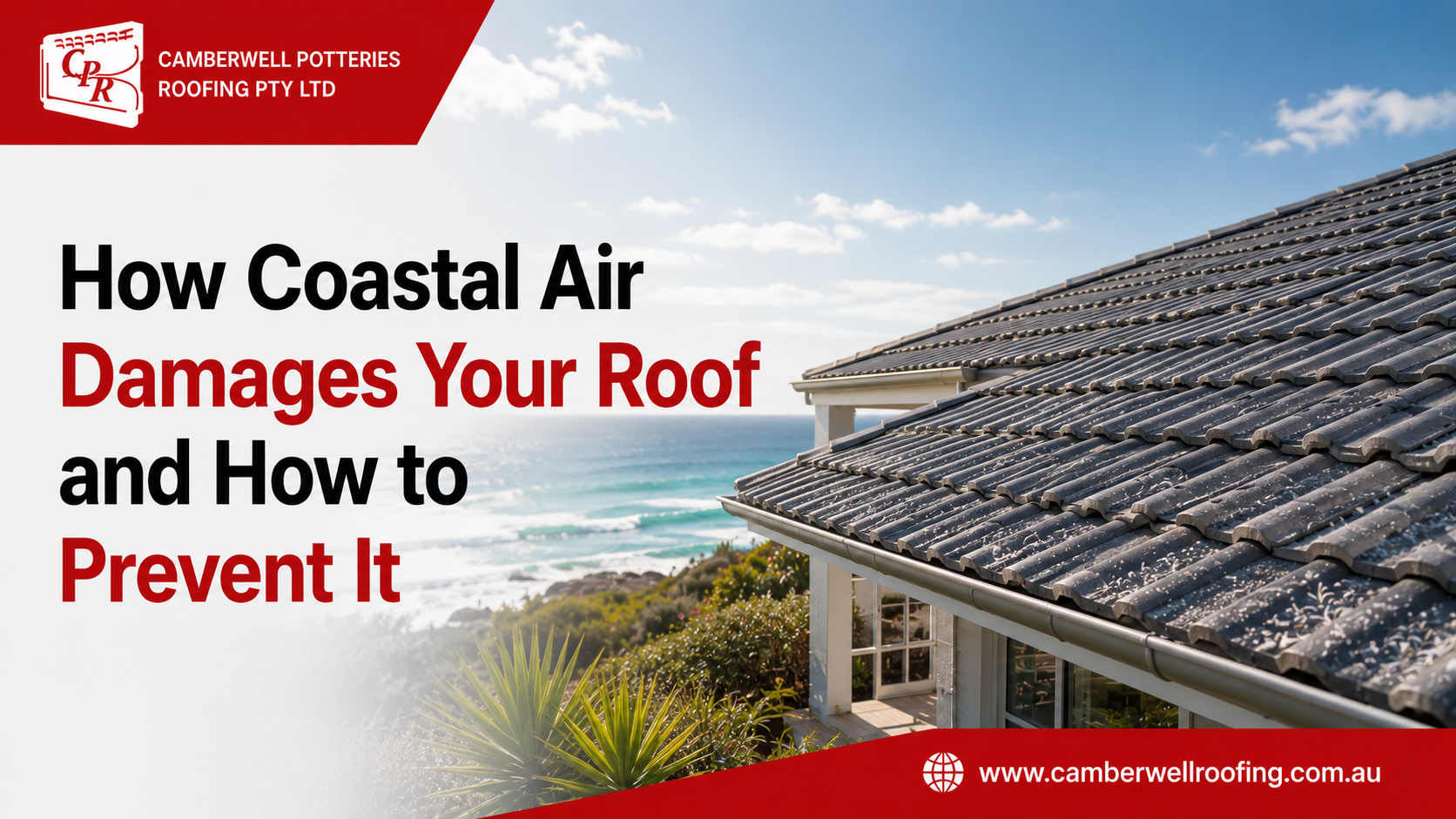
How Coastal Air Damages Your Roof and How to Prevent It
If you live near the water in Melbourne, you already know the trade-off. The sea breeze that makes summer bearable is quietly working against your roof every single day. Salt does not announce itself. It just settles, builds up, and corrodes, and most homeowners only notice once the repair bill has arrived.
The good news is that coastal roof damage is largely preventable. It comes down to the right material, regular roof maintenance in Melbourne, the right fixings, and a rinse now and then.
This guide explains exactly how salt air attacks a roof, and what you can do to stay ahead of it.
Why Is Salt Air So Hard on Roofs?
Salt is one of steel’s oldest enemies, and coastal air carries it everywhere. Prevailing winds pick up fine salt particles off breaking surf and drop them across every roof for kilometres inland.
The problem is not the salt landing once. It is the salt staying put. On parts of the roof that rain never reaches- the deeper valleys, the underside of eaves, the sheltered flashings- salt builds into a crust. That crust holds moisture against the metal around the clock, and constant moisture is what drives corrosion.
Here is the part that catches people out. Two houses on the same street can weather very differently. Exposure depends on wind direction, elevation, and what sits between you and the water. Also, because they do roof maintenance differently in Melbourne.
What Does Coastal Air Actually Damage?
Salt does not attack a roof evenly. It goes for the weak points first, and knowing them tells you where to look.
- The fasteners: Screws, nails, and clips are small and often the first to rust. As they corrode, panels loosen and gaps form, allowing water in.
- The flashings and valleys: These channels allow water to pass through, so they stay damp longer and trap salt more easily.
- The protective coating: Wind-driven grit and constant humidity slowly wear down the finish on both metal and tile.
- The fixing points on tiles: On tiled roofs, the mortar and metal fittings suffer even when the tiles themselves hold up.
Fastener failure deserves special attention. A roof can look perfectly sound from the ground while the screws holding it down quietly rust through. That is often how the first leak appears, seemingly out of nowhere. These are the coastal roofing problems that do the most expensive damage precisely because they stay hidden.
Which Materials Survive Salt Air Best?
Material choice is the single biggest decision for a coastal home. The right material lasts for decades. The wrong one fails within a few years.
For most Australian beachside homes, these are the materials worth knowing:
- Standard Colorbond steel: Suits homes set well back from the water. It performs reliably when rain regularly rinses the roof.
- Colorbond Ultra steel: Ultra is recommended for severe marine areas roughly 100 to 200 metres from breaking surf, where you can smell salt in the air. It uses a tougher substrate built to resist corrosion.
- Stainless steel grades: For homes within about 100 metres of breaking surf, a stainless substrate handles the harshest exposure.
Choosing the right Colorbond roofing coastal environments grade is not about looks. It is about the substrate beneath the paint, which is the part that actually resists the salt. A roofer who knows the local area can assess your exposure, since a home on an exposed ridge facing the surf sits in a different situation from one tucked behind other buildings.
How Can You Prevent Coastal Roof Damage?
Prevention is far cheaper than replacement, and much of it is genuinely simple. A few habits protect the roof for decades.
- Rinse the roof with fresh water: This is the one thing every coastal homeowner should do. A wash every few months clears the salt crust from the sheltered areas rain never reaches.
- Use stainless steel fasteners: Replacing standard screws and nails with stainless options eliminates the most common failure point.
- Choose the right material grade upfront: If you are re-roofing, spend on the correct coastal grade the first time.
- Reseal vulnerable joints: Reapplying anti-corrosion coatings to flashings and joints protects the spots that fail first.
The rinsing point is worth repeating, because it costs almost nothing. Even the toughest marine-grade steel still needs it, since salt build-up damages any surface over time. Think of it as protecting roofs from salt air the same way you would rinse sand off a bike after the beach.
When Should You Call a Professional?
Some of this you can handle yourself. A garden hose and stainless-steel fittings are well within reach. Other parts need trained eyes.
A professional can spot corrosion you cannot see from the ground, particularly around fasteners and hidden flashings. They can also confirm whether your material grade actually matches your exposure. Booking regular roof inspection services is the smartest form of coastal home roof maintenance, because catching a failing fastener early costs a fraction of the cost of repairing water damage later.
As a rule, have a coastal roof checked once a year, and again after any severe storm. Salt-laden wind does its worst damage during exactly those events.
Protect Your Roof Before the Salt Wins
Coastal living is worth it, and your roof does not have to pay the price. The formula is straightforward. Rinse it regularly, fit stainless fasteners, choose the right grade of steel, and have it inspected once a year.
A trusted roofing contractor Melbourne homeowners rely on can assess your exposure and recommend exactly what your home needs. If your roof is near the water and overdue for a look, book an inspection today and stay ahead of the salt.
FAQs
How often should I rinse a coastal roof?
Every few months, with fresh water. It clears the salt that builds up in areas where rain never reaches, such as valleys and under eaves.
Is Colorbond good for homes near the beach?
Yes, but the grade matters. Homes within about 100 to 200 metres of breaking surf should use Colorbond Ultra, not the standard version.
How do I know if salt is already damaging my roof?
Look for rusting screws, loose panels, or streaky stains. Often, the fasteners go first, so a roof can look fine while trouble hides underneath.
Can I clean the roof myself?
The rinsing, yes, a garden hose does the job. Leave the close-up checks for corrosion and flashings to a professional, since those spots are easy to miss.
How close to the water is too close for standard Colorbond?
As a rough guide, homes within a kilometre of the surf should get their exposure checked. Wind and elevation matter as much as distance.