

Why Roof Repairs Sometimes Fail and How Proper Diagnosis Prevents It
A roof repair can fail even when the visible damage looks perfectly fixed. That is because a leak returning weeks later does not always mean the first attempt was done badly.
Water does not always enter directly above the stain on your ceiling. Instead, it often travels along timber and sarking before finally dripping inside your home. Treating just this visual symptom is how homeowners end up paying for the same fix twice.
Ultimately, quality roof repairs Melbourne must start with a proper diagnosis.
Why Do Roof Repairs Sometimes Fail?
Most failed roof repairs share a handful of root causes. The wrong problem gets identified, or the true source of water is never correctly located. Hidden damage is missed, or several roofing components contribute at once.
Sometimes a temporary patch is used where more thorough work was really needed. Poor materials or rushed installation can undo even a well-intentioned repair.
Repairing the Symptom Instead of the Cause
A wet patch on the ceiling is a symptom, not the source. Fixing only that spot leaves the actual entry point untouched and active. The leak keeps returning because the water still finds its original path inside.
Misidentifying the Source of a Roof Leak
Leaks are deceptive because water moves before it drips. A ceiling stain can sit several metres from where water actually enters the roof. Without tracing that path, a repair simply targets the wrong tile.
Common Reasons Roof Repairs Keep Failing
Recurring roof repair problems usually trace back to a few overlooked culprits. Understanding them helps you ask sharper questions before work begins.
-
The wrong area was repaired
Water travels along battens and rafters, so the visible damage misleads the repair. The entry point is often upslope from the stain, sometimes by a metre or more.
-
Damaged flashing was overlooked
Flashing seals the joins around chimneys, valleys and penetrations. When it fails, water sneaks past tiles that look completely intact.
-
Cracked or missing tiles were not properly addressed
Replacing one tile helps only if that tile was the true problem. A poorly matched or loosely bedded replacement soon leaks again.
-
Gutters and valleys are blocked or damaged
Blocked gutters push water into places it should never reach. Overflow then enters the roof through gaps that normally stay dry.
-
Deteriorated bedding and pointing
Cracked mortar under ridge caps lets water seep in slowly. Left alone, it undermines nearby tiles over time.
Why Proper Roof Diagnosis Matters Before Repairs
A successful repair begins with finding the actual cause, not the visible clue. Good roof repair diagnosis treats the roof as one connected system rather than a single wet spot.
Finding the Actual Source of Water Entry
Tracing the water path matters far more than patching where it appears. Water follows roof sheets, timber framing, insulation and cables before dripping inside. A skilled roofer works backwards from the stain to the genuine entry point.
Inspecting the Entire Roof System
A proper inspection covers tiles, flashings, valleys and ridge capping together. It also checks gutters, sarking, roof penetrations and the structure where access allows. Any one of these can be the hidden reason a repair failed.
Identifying Multiple Problems at Once
One leak often has several small contributors working together. A cracked tile, tired pointing and a blocked valley can combine into a single drip. Fixing just one leaves the others free to cause the next leak.
What Does a Professional Roof Inspection Look For?
A thorough inspection follows a clear checklist across the whole roof:
- Cracked, broken or missing tiles
- Loose or deteriorated ridge capping
- Damaged flashings around joins and penetrations
- Blocked valleys and gutters
- Signs of water ingress inside the roof space
- Deteriorated mortar and pointing
- Timber damage where it can be safely reached
The method depends on the roof’s condition, access and safety, so it does not always mean walking across the tiles. On fragile or steep roofs, inspection from safe vantage points protects both the roofer and your roof.
Why Temporary Roof Repairs May Not Be a Long-Term Solution
A quick patch has its place, though rarely as a permanent answer. Knowing when each approach fits saves money over the long run.
When a Temporary Repair May Be Appropriate
Emergencies sometimes call for fast, short-term protection. A temporary seal can hold back water while a proper solution is planned. It buys time without pretending to be a lasting fix.
When a Permanent Repair Is More Suitable
Once the weather clears, a permanent repair addresses the real cause. It restores the affected area and checks the surrounding components properly. This is the point where lasting protection actually begins.
When Repairs Are No Longer Cost-Effective
Repeated patching adds up to more than a single proper job. The roof’s age and overall condition should guide the decision. At some stage, ongoing repairs cost more than they are worth.
Roof Repair vs Roof Restoration vs Re-Roofing
Not every roofing problem needs the same solution. Matching the fix to the roof’s real condition prevents wasted spending.
When a Simple Roof Repair Makes Sense
Isolated, minor damage on an otherwise sound roof suits a targeted repair. A single cracked tile or one failed flashing rarely needs more than that.
When Restoration May Be Better
Widespread surface wear across an ageing roof points toward restoration. Rebedding, repointing and sealing renew the roof without full replacement.
When Re-Roofing Should Be Considered
A roof near the end of its life with repeated failures may need replacing. Re-roofing resolves what patch repairs never can on a worn-out structure.
Questions to Ask a Roofing Contractor Before a Repair
The right questions protect you from paying twice for the same leak:
- What is causing the problem?
- Where is the actual source of the leak?
- Are there other contributing issues?
- Is this repair expected to be temporary or long-term?
- Are any underlying components damaged?
- Does the roof need restoration rather than a local repair?
- Could the age and condition of the roof make re-roofing more appropriate?
- What work is included in the quote?
Reputable roofing contractors Melbourne homeowners rely on will answer each one clearly and without pressure.
Diagnose First, Repair Once
Roof repairs fail most often when the underlying problem is never correctly diagnosed. Leaks are hard to trace because water travels well before it becomes visible inside.
A proper inspection treats the roof as a complete system, not one isolated defect. Regular maintenance helps catch these problems earlier, before they force repeated repairs. When repairs keep returning, or deterioration spreads widely, restoration or re-roofing may be the smarter move.
As an established roofing company in Melbourne, Camberwell Potteries Roofing diagnoses the real cause before lifting a single tile. If leaks keep recurring, book a professional inspection with our roofing company’s Melbourne team before your next patch repair.
Frequently Asked Questions
Why does my roof leak again after being repaired?
The original repair likely fixed the visible spot, not the true source. Water often enters elsewhere and travels to the stain you see.
Why are roof leaks difficult to locate?
Water rarely drips straight down from its entry point. It moves along timber and sarking first, so the source sits away from the stain.
Can a roof repair fix a leak permanently?
Yes, when the real cause is correctly diagnosed and addressed. A repair based on guesswork is the one most likely to fail again.
What causes recurring roof leaks?
Common causes include failed flashing, blocked valleys and deteriorated pointing. Several minor faults often combine into one persistent leak.
Should I repair or replace my roof?
Isolated damage on a sound roof suits a repair. Widespread wear or repeated failures may call for restoration or re-roofing instead.
How can a roof inspection prevent failed repairs?
An inspection traces the leak to its actual source across the whole roof. This means the repair targets the real problem, not a symptom.
When should I consider roof restoration instead of repairs?
Restoration suits an ageing roof with general surface deterioration. It renews the whole roof rather than patching one area at a time.
How do I know if I need re-roofing?
Frequent leaks, rising repair costs and widespread deterioration are key signs. A professional inspection confirms whether replacement is the wiser choice.
What Roof Structure Problems Can Delay a New Roof Installation in Melbourne?
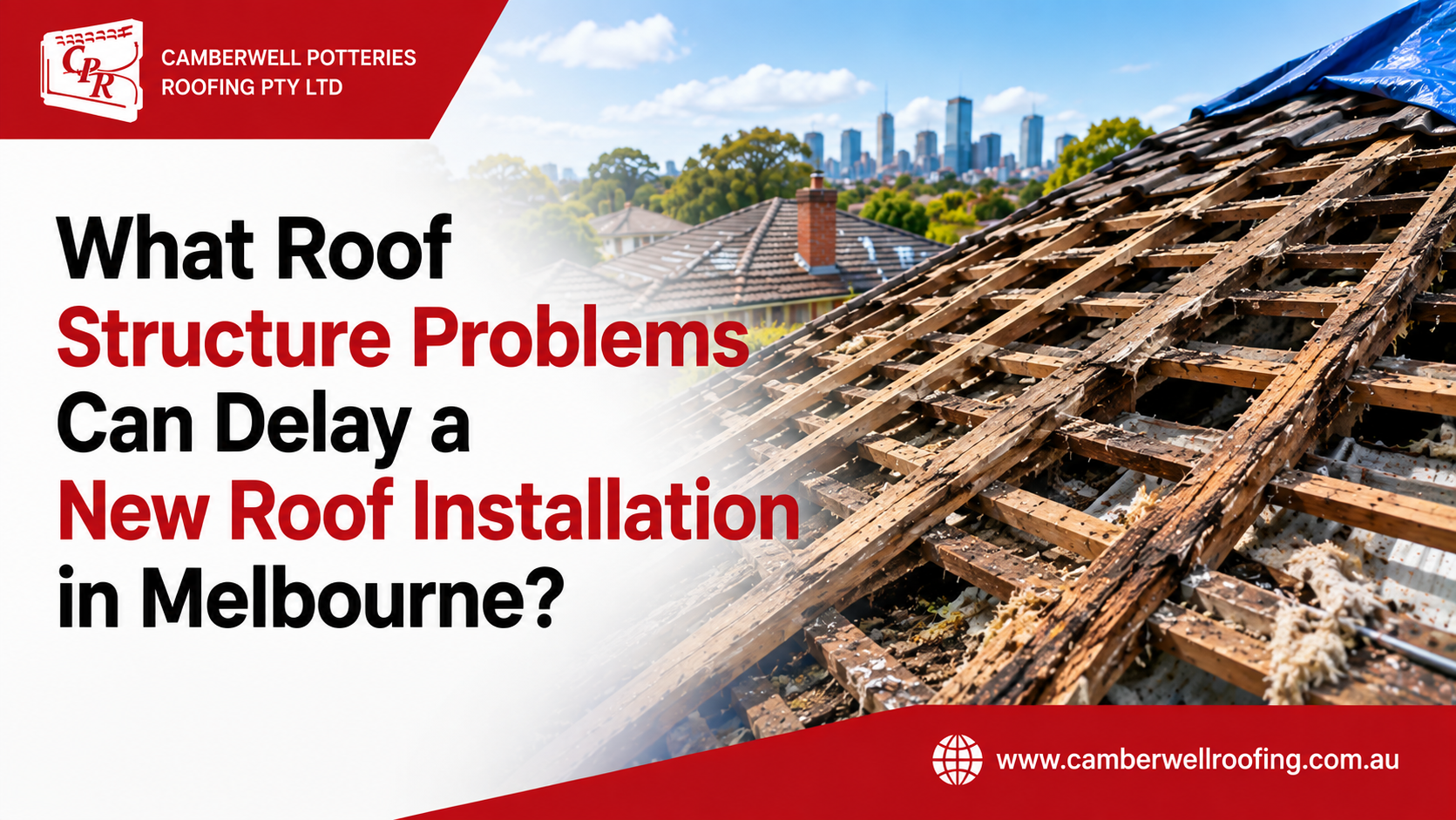
A new roof is never just a swap of old tiles for new ones. The timber structure underneath has to be sound enough to carry the new roofing system. When old materials come off, hidden faults in that structure often come to light. The usual culprits are:
- Damaged rafters
- Sagging battens
- Rotten timber
- Old water damage
Spotting these before a new roof installation in Melbourne begins is what keeps a project on time and on budget. Left undiscovered, they cause delays, surprise costs and roofing failures down the track.
Why Roof Structure Matters Before a New Roof Installation
Your roofing materials are only as reliable as the frame holding them up. Tiles, battens and flashing all depend on a stable structure beneath them. If that structure sags or shifts, the whole roof loses its alignment and strength. Fixing new materials over damaged timber simply hides a problem that will resurface later. That is why a proper inspection should always happen before major roofing work starts.
The Difference Between Roofing Materials and Roof Structure
People often use “roof” to mean the tiles they can see from the street. In reality, the visible covering and the structure below it are two separate things. The structure is the timber framework of rafters, beams and battens. The covering is the tiles or sheeting fixed on top of it. A new covering cannot correct faults sitting in the frame underneath.
Common Roof Structure Problems That Can Delay Installation
Several structural issues tend to surface once the old roof is stripped back. Each one can pause a job until it is properly repaired.
-
Sagging roof sections
A dip or uneven ridge line usually points to weakened framing below. It signals that timber has lost strength and needs attention first.
-
Damaged or rotten rafters
Rafters carry the load of the entire roof. Once rot sets in, they can no longer support new materials safely.
-
Deteriorated roof battens
Battens give tiles their fixing points across the frame. Timber battens are prone to moisture and rot and often need replacing at reroofing.
-
Water-damaged timber
Long-term leaks soften timber and invite decay. Wet rot takes hold at around 50% moisture content, while dry rot spreads from roughly 20%.
-
Cracked or weakened components
In older tiled homes, salts from the tiles can break down timber. This is classified as a structural defect under Australian standard AS 4349.1.
What Happens If Structural Problems Are Found During a Roof Replacement?
Finding damage mid-project is common, and a good contractor handles it in a clear, staged way.
The Installation May Need to Pause
Work usually stops so the structural repairs can be completed first. New tiles cannot go onto timber that is not fit to hold them.
Additional Repair Work May Be Required
This can mean replacing damaged timber and repairing battens across affected sections. It may also involve correcting the roof’s alignment and treating the source of any water damage.
The Project Timeline May Change
Unexpected repairs shift the schedule for labour, material installation, and the completion date. Honest contractors will explain the new timeline rather than rush the fix.
The Final Cost May Increase
Structural repairs add to the original quote, so a small contingency in your budget is wise. Planning for it means an unwelcome surprise never derails the whole project.
Can Structural Problems Be Identified Before the Old Roof Is Removed?
Some can, though not all of them. An initial inspection reveals plenty. However, certain faults only appear once the covering is off.
A thorough pre-installation check normally includes:
- An external visual inspection
- A roof-space inspection where access allows
- Checks for sagging and water stains
- Timber condition
- Examines battens and framing
- Looking for signs of previous repairs
Even a careful inspection cannot promise to find every hidden defect, since some damage stays concealed until the tiles are lifted.
How Melbourne Weather Can Contribute to Roof Structure Problems
Melbourne’s changeable climate puts steady pressure on roof timber over the years.
Heavy Rain and Persistent Moisture
Water entering through cracked tiles slowly saturates the timber below. Over time that moisture feeds rot and weakens rafters and battens alike.
Storms and Strong Winds
Strong gusts shift roofing materials and stress older frames. Repeated movement loosens fixings and can damage the components holding your roof together.
Temperature Changes
Melbourne’s swings between hot and cold make timber expand and contract. Season after season, this cycle gradually wears roofing components down.
How to Prepare Your Home for a New Roof Installation
A little preparation keeps your project smooth from the first day. Arrange a professional roof inspection well before you sign anything. Discuss the condition of your existing roof structure with your roofer directly. Ask about potential hidden repairs so nothing catches you off guard later. Confirm the full scope of work in writing, and allow room in your budget for unexpected structural repairs.
Questions to Ask Your Roofing Contractor Before Installation
The right questions protect you from vague quotes and mid-job disputes.
- Have you inspected the existing roof structure for water damage or structural issues?
- Do the current battens suit the new roof, or will structural repairs be needed?
- What happens if hidden damage is uncovered mid-project, and are basic repairs included in the quote?
- Who performs any necessary structural repairs, and how will that affect the project timeline?
Reputable roofing contractors Melbourne homeowners rely on will answer every one plainly.
When Should Structural Repairs Be Completed?
Structural repairs should generally happen before the new roofing system goes on. This applies wherever the repair affects the safety, support, or installation of the roof.
That means fixing framing, replacing damaged battens and completing roof repairs before the tiles. Ongoing water ingress must be stopped at its source first. Once repairs are done, the roof should be rechecked before installation continues.
Roof Structure Problems vs Normal Roof Wear
| Roof structure problems | Normal roof wear |
| Sagging or uneven ridge lines | Faded or weathered tile colour |
| Rotten rafters or battens | A few cracked or slipped tiles |
| Timber softened by long-term leaks | Minor moss or surface debris |
| Affects safety and support | Affects appearance and minor function |
| Needs repair before reroofing | Handled during routine maintenance |
Plan Ahead and Keep Your Roof Project on Track with Camberwell
A new roof needs a stable, suitable structure beneath it to succeed. Structural faults cause delays most often when they are discovered late in the job. Sagging, timber decay, damaged battens and long-term water damage are the warning signs that matter. A professional inspection before installation helps flag these early and sharpens your project planning.
Talk through your existing roof structure and any likely repairs with us before work begins. Camberwell Potteries Roofing offers trusted roofing services Melbourne locals count on, so book your assessment before your new roof project starts.
Frequently Asked Questions
Can a damaged roof structure prevent a new roof installation?
Yes, significant structural damage must be repaired before new roofing goes on. Tiles cannot sit safely on timber that has lost its strength.
What structural problems can delay roof replacement?
Sagging sections, rotten rafters, deteriorated battens and water-damaged timber are the main ones. Each needs repair before the new roof is installed.
How do you know if roof rafters are damaged?
Signs include a sagging roofline, soft or discoloured timber and damp patches in the roof space. A roof-space inspection confirms their true condition.
Do roof battens need to be replaced when installing a new roof?
Often yes, especially older timber battens affected by moisture or rot. Sound battens may be kept if they still meet the new roof’s requirements.
Can a sagging roof be repaired before installing a new roof?
Yes, the underlying framing is repaired or reinforced first. The new covering then goes onto a corrected, stable structure.
What happens if hidden damage is found during roof replacement?
Work pauses so the damage can be repaired, which may adjust cost and timing. A good contractor explains the change before continuing.
Should the roof structure be inspected before installing new tiles?
Yes, an inspection before installation is strongly recommended. It catches problems early and improves overall project planning.
How can I avoid unexpected delays during a new roof installation?
Arrange a thorough inspection, confirm the scope in writing, and budget a contingency. Clear communication with your roofer prevents most surprises.